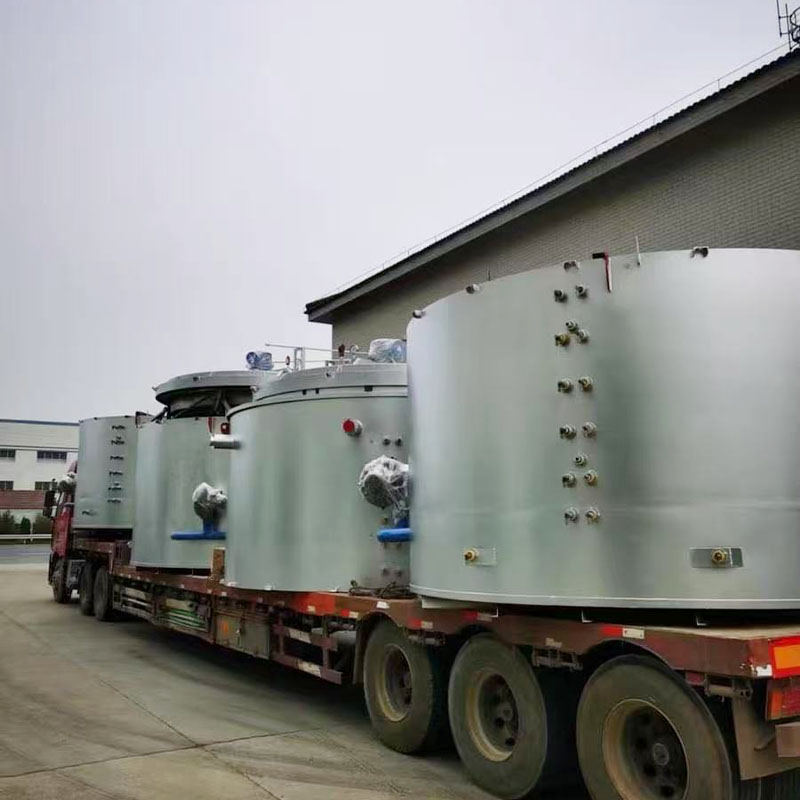
2 Ton Well Type Annealing Furnace for Steel Wire Coils
Electric Well Type Wire Annealing furnace · 850 °C max · vacuum + protective gas · 3-zone PID control
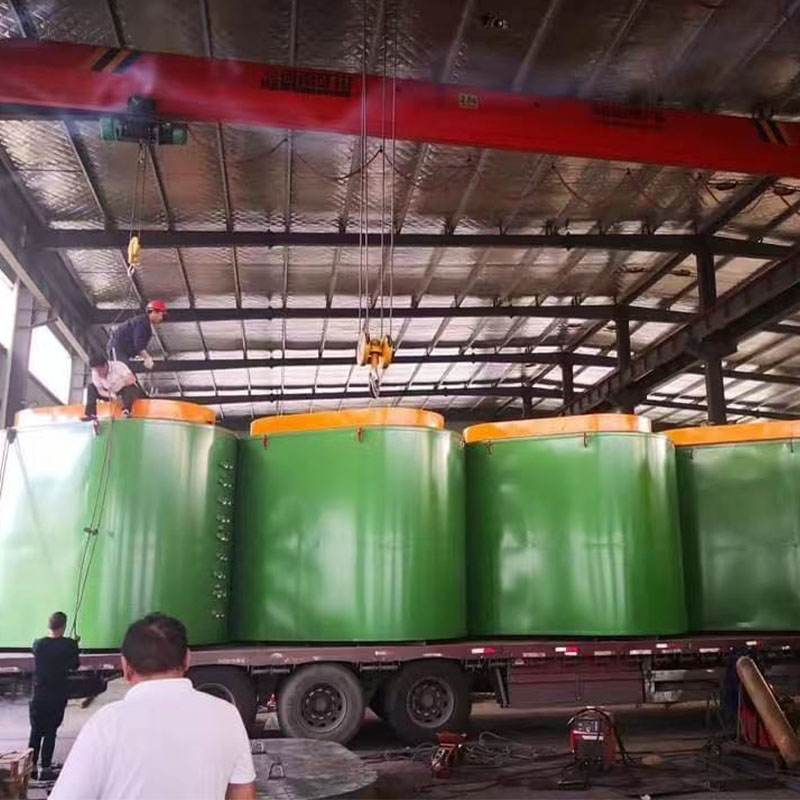
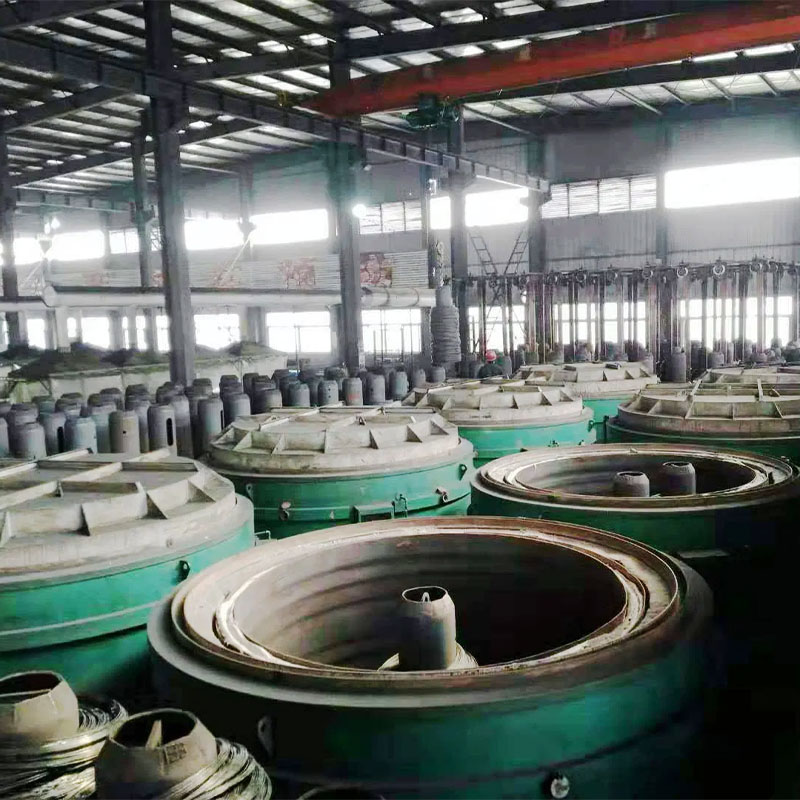
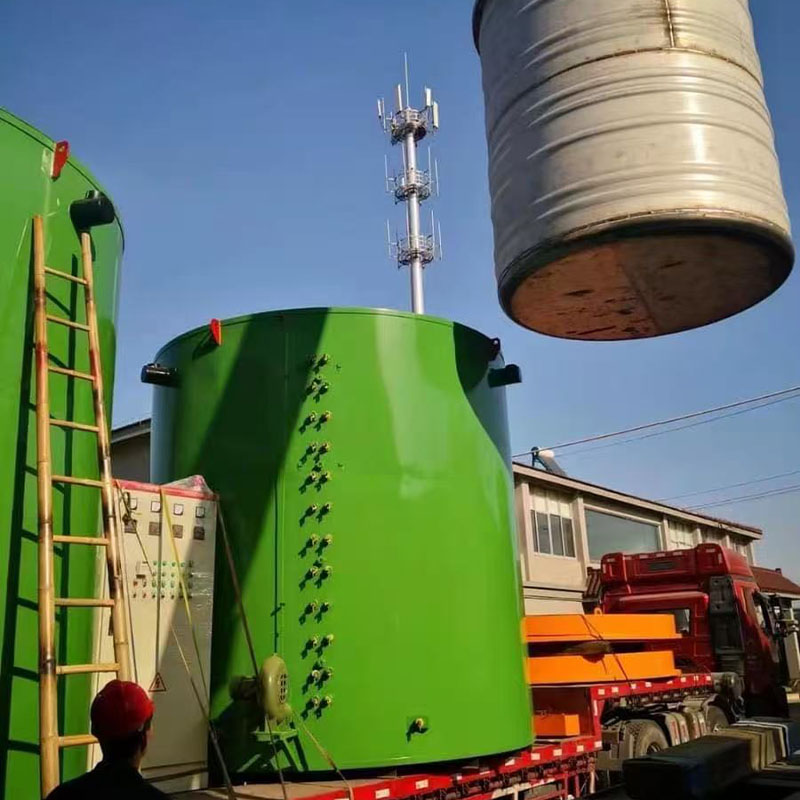
The YF Metal Tech RJ-110-8 is a 2-ton, top-loading well type annealing furnace (pit type annealing furnace) for wire coils. It heats one 2.0 t coil stack inside a sealed 321 stainless steel liner, evacuates the air, fills protective gas and follows a preset temperature curve, so the wire softens without scaling. Installed heating power is 110 kW (380 V, 50 Hz). Maximum furnace temperature is 850 °C and working temperature is 760 °C.
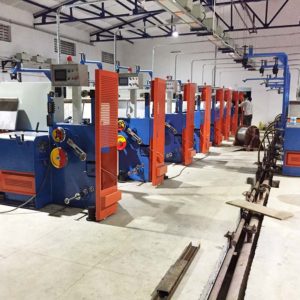
We build this electric annealing furnace in Jiangyin, Jiangsu, alongside our wire drawing machines. It is made for wire plants that need soft, oxide-free wire between drawing passes or before further processing.
2 Tons Well Type Annealing Furnace Specification
|
Parameter |
Specification |
|---|---|
| Model | RJ-110-8 well type annealing furnace |
| Heating method | Electric resistance, Cr20Ni80 nickel-chromium flat strip |
| Rated heating power | 110 kW (380 V, 50 Hz) |
| Furnace diameter | Ø900 mm |
| Effective loading height | 2,000 mm (including loading plate) |
| Loading rack base plate | Ø800 mm |
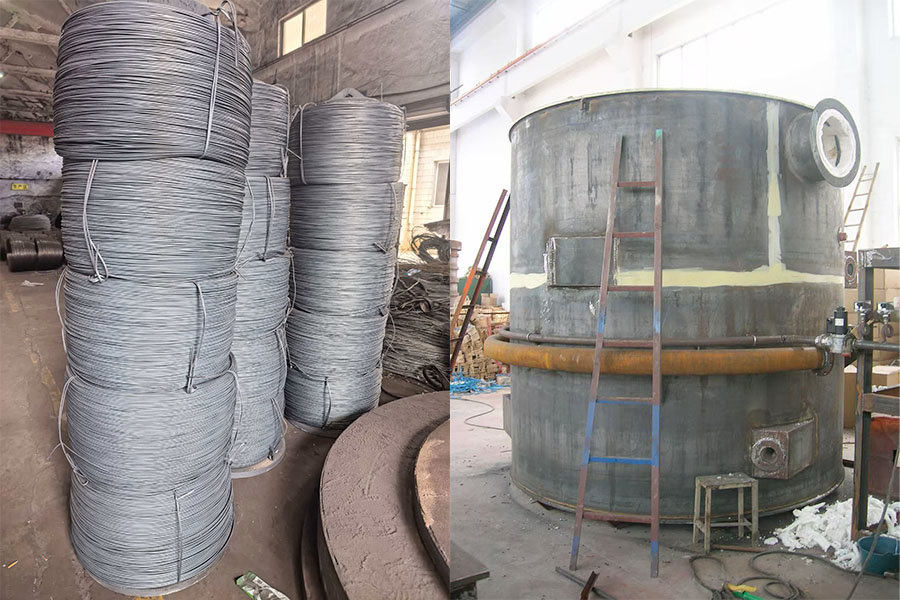
| Single wire-coil stack | Ø800 mm, height up to 2,000 mm, about 2.0 t |
| Charge per batch | About 2.0 t |
| Maximum operating temperature | 850 °C |
| Working temperature | 760 °C |
| Temperature control zones | 3 (upper, middle, lower), independently controlled |
| Control accuracy | ±2 °C |
| Furnace temperature uniformity | ±5 °C (late holding stage) |
| Furnace shell surface temperature rise | ≤ 35 °C above room temperature |
| Atmosphere | Vacuum evacuation, then protective gas fill |
| Furnace liner | 10 mm 321 stainless steel |
| Insulation | 350 mm total: 300 mm ceramic fiber module + 25 mm ceramic fiber blanket on each side |
| Control system | PID touch-screen cabinet with program temperature controller, RS-485 communication |
| Supplied with each furnace | 1 furnace body, 2 liners, 2 loading racks, 1 control cabinet, 1 vacuum pump (2X-30) |
Specifications are for model RJ-110-8. Voltage, dimensions and power can be adapted to your plant (see Customization below).
Key Features of the RJ-110-8 2 Ton Well Type Wire Annealing Furnace
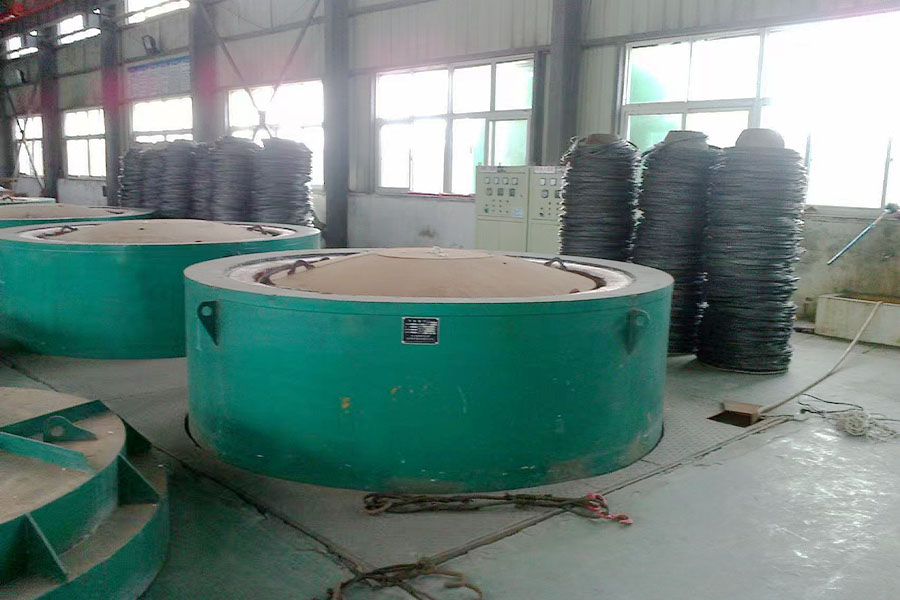
- Two liners per furnace. The furnace ships with 2 stainless steel liners and 2 loading racks. After soaking, the charge cools with the furnace to 600 °C, the first liner is lifted out to finish cooling, and a second loaded liner goes straight in. The heating body does not wait for the charge to cool.
- Vacuum first, then protective gas. A 2X-30 two-stage rotary vane vacuum pump removes the air before gas is filled. Evacuating first leaves less residual oxygen, and uses less gas, than flushing with gas alone.
- Three independent temperature zones. Upper, middle and lower zones are controlled separately, with ±2 °C control accuracy and ±5 °C uniformity in the late holding stage. This keeps a 2-metre coil stack soft from top to bottom.
- Fully programmed cycle. The touch screen stores the annealing curve, runs heat-up and holding automatically, records temperature in real time, keeps historical data and raises alarms for overheating and faults.
- Sealed liner with water-cooled flange. The flange has a dovetail seal groove and a silicone seal ring. Water-cooling sleeves on the cover top and flange bottom protect the ring from heat. The cover carries a vacuum gauge and a safety valve.
- Low heat loss. 350 mm of insulation keeps shell surface temperature rise at or below 35 °C above room temperature, which is safer for operators and wastes less heat.
- Durable heating elements. Wave-formed Cr20Ni80 flat strip surrounds the furnace and is locked to the wall with high-temperature spiral porcelain nails.
- 321 stainless steel liner. Grade 321 is titanium-stabilized, so it resists intergranular corrosion after repeated heating through the sensitizing range (roughly 425–815 °C).
Annealing Cycle, Construction, Control System
How the 2 Ton Well Type Annealing Furnace Works?
One batch is one 2.0 t coil stack. The cycle has seven steps:
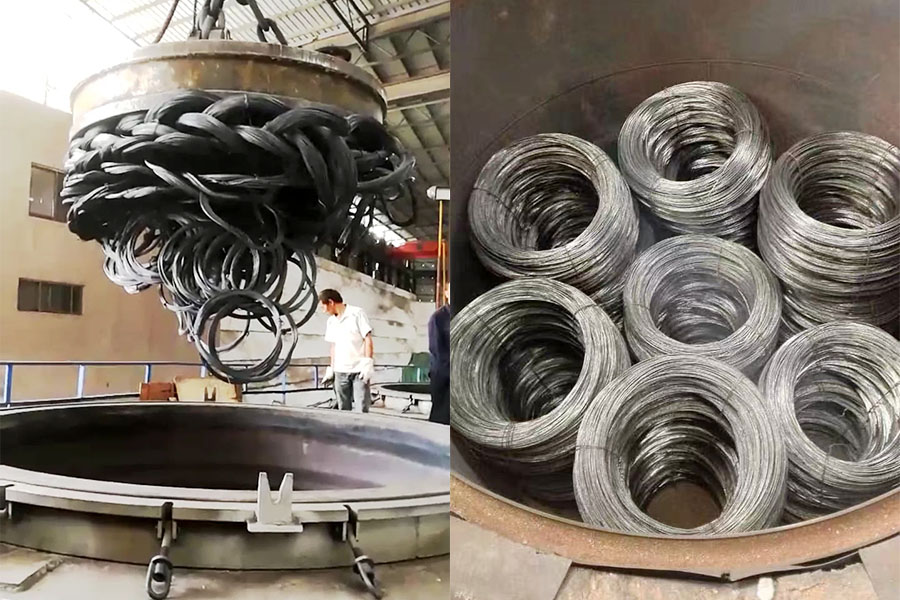
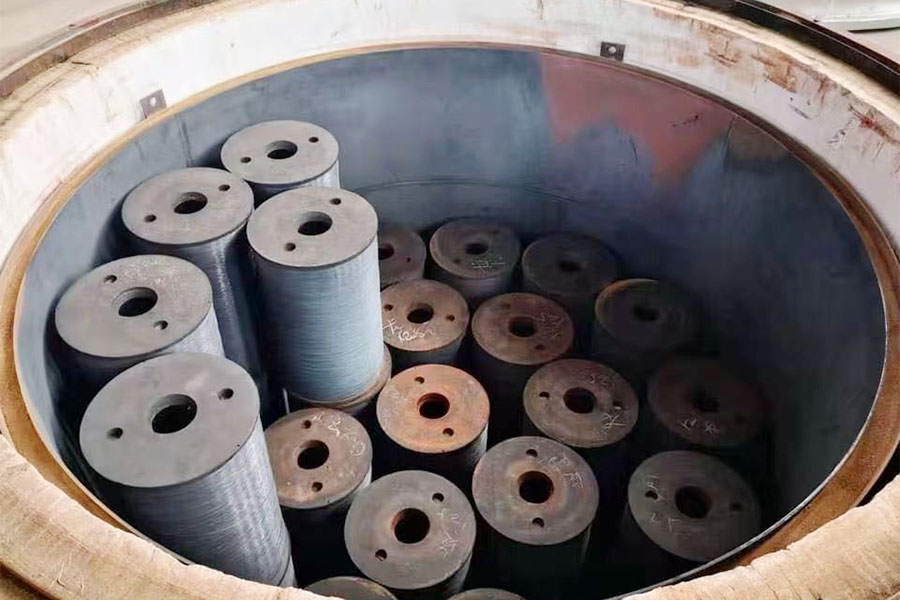
- Load. Stack the wire coils on the loading rack (Ø800 mm base plate), hoist the rack into the stainless steel liner, then close and lock the furnace cover.
- Evacuate and fill. Connect the circulating cooling water, pump the air out, then fill protective gas.
- Heat and hold. The controller runs the preset curve automatically, with the three zones controlled independently.
- Furnace-cool to 600 °C. After holding, switch off heating and let the charge cool slowly with the furnace to 600 °C.
- Swap liners. Lift the liner out to continue cooling, and hoist the next loaded liner into the furnace at the same time.
- Cool to process temperature. Keep the liner sealed until the charge reaches the temperature set in your process, then shut off the cooling water.
- Discharge. Release the cover lock, open the cover and take out the wire.
Cycle time depends on wire grade, diameter, coil density and your target properties. Send us your wire details and we will recommend an annealing curve and a cycle estimate.
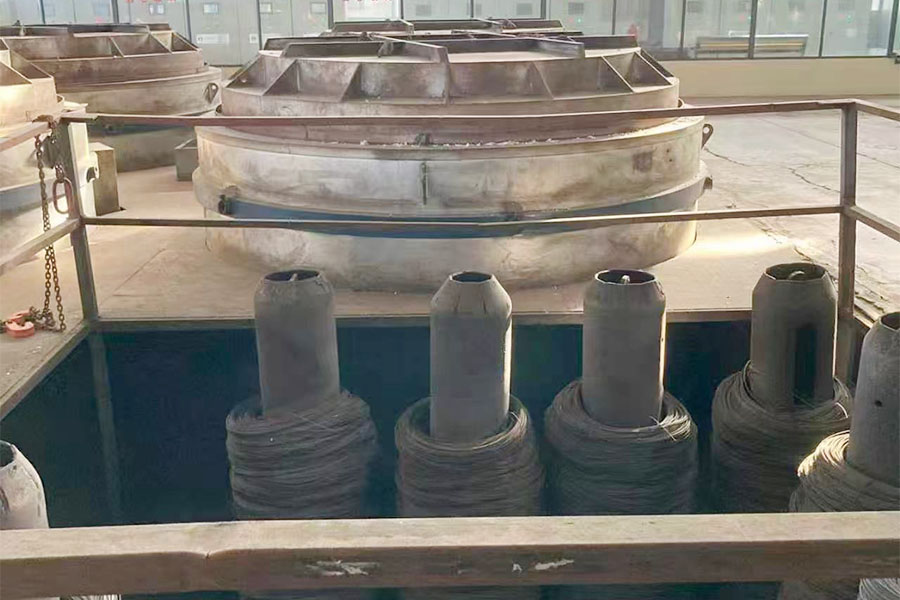
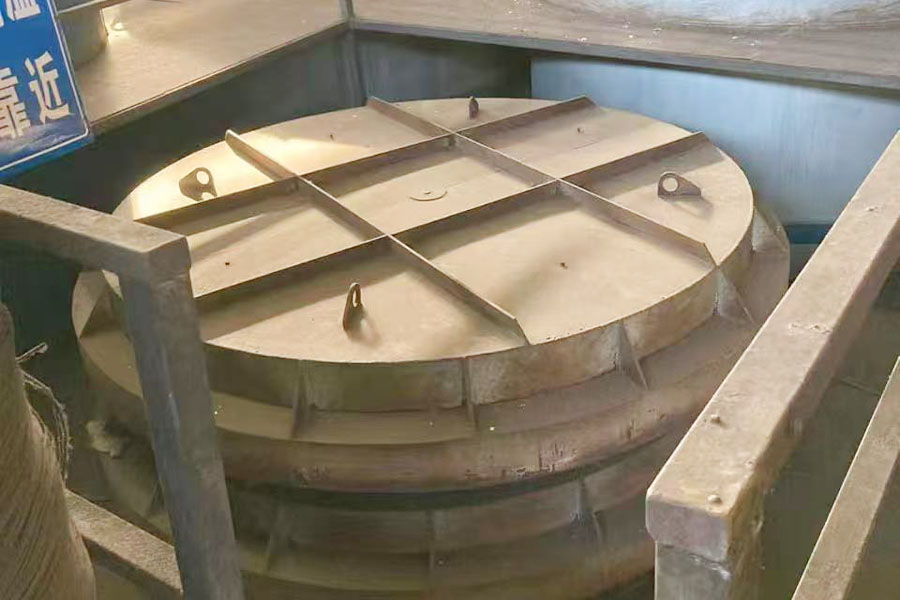
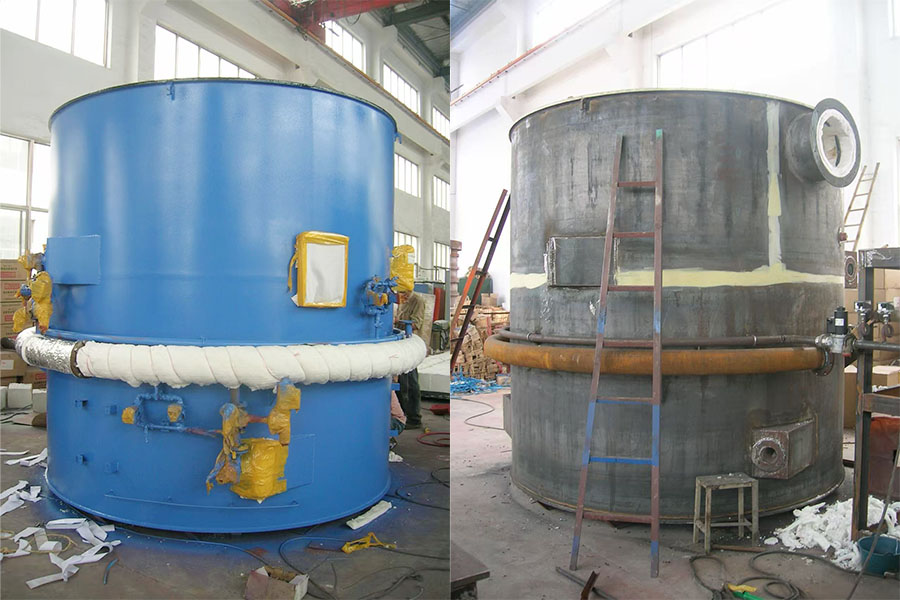
Construction of the RJ-110-8: Liner, Loading Rack, Furnace Body
| Part | Construction |
|---|---|
| Liner body | 10 mm 321 stainless steel plate |
| Liner head | 10 mm 321 plate pressed into a pot shape for compression resistance; 12 mm 16Mn manganese steel movable support pads carry the loading rack; 10 mm 321 foot ring with stiffeners |
| Flange and cover | 30 mm Q235 steel plate flange; dovetail seal groove with silicone seal ring; water-cooling sleeves on the cover top and flange bottom |
| Cover fittings | Vacuum valve, exhaust valve, vacuum pressure gauge, safety valve and lifting device; cover insulation layer of 4 mm 321 plate filled with insulation cotton |
| Gas filling | Gas filling device at the bottom of the liner |
| Loading rack | Ø800 mm base plate, 20 mm Q235; Ø351 × 8 mm central riser; air holes spread over the plate and riser; lifting point at the top of the riser |
| Furnace shell | Two-section body; 5 mm Q235 steel frame, 12 mm Q235 base plate with reinforced I-beams, 20 mm Q235 panel with support plates underneath |
| Lining | 300 mm pressed ceramic fiber modules with 25 mm ceramic fiber blanket inside and outside (350 mm total), rated to 1,000 °C; floor of insulating brick below and high-alumina refractory brick above |
| Heating elements | Cr20Ni80 flat strip, wave-formed, around the furnace wall; fixed with high-temperature spiral porcelain nails; 110 kW in three zones |
| Side fittings | Thermocouples, resistance strip lead-out bars, copper clamps and protective cover |
PID Touch-Screen Control Cabinet
The cabinet runs the whole cycle and keeps a record of it:
- Independent temperature control of the upper, middle and lower zones through an intelligent program temperature controller.
- Preset annealing curve on the touch screen; heat-up and holding follow the curve automatically.
- Real-time temperature recording, automatic storage of historical data and a heating status display.
- RS-485 link to the temperature controller for outputting the process curve.
- Furnace pressure monitoring.
- Alarms for overheating and faults.
Applications: Which Wire Can This Annealing Furnace Process?
The RJ-110-8 is built for batch annealing of wire coils at up to 850 °C. Typical uses:
|
Wire or product |
Why anneal |
Notes |
|---|---|---|
| Low- and medium-carbon steel wire (drawn) | Remove work hardening between drawing passes | Curve set by grade and diameter |
| Welding wire and CO₂ gas shielded welding wire | Soften wire before further drawing and copper plating | Pairs with our CO₂ welding wire production line |
| Binding wire and black annealed wire | Soft, flexible wire for tying and construction | Vacuum plus protective gas allows a bright, oxide-free finish |
| Wire for nails, wire mesh and galvanized products | Restore ductility to the required level | Tell us the next process step |
| Medium-carbon and alloy wire for cold heading | Spheroidizing or softening before forming | Confirm curve and cooling rate with our engineers before ordering |
| Copper, aluminum and other non-ferrous wire | Soften at lower set-points | Tell us the alloy; we confirm the process first |
Not the right furnace for: solution annealing of stainless steel wire, which normally needs temperatures above this furnace’s 850 °C limit. Tell us your requirement and we will advise whether a different design is needed.
Industries we serve: metal wire manufacturing plants, welding wire factories, construction and infrastructure, electrical and cable, automotive and industrial components.
Well Type vs Bell Type vs Continuous Annealing Furnace
|
Factor |
Well type (pit) — this furnace | Bell type |
Continuous |
|---|---|---|---|
| How it loads | Coil stack on a rack is lowered from above into a fixed furnace chamber (here, a sealed liner) | A heating bell is lowered over a stack standing on a base | Wire runs through a heated tube or muffle without stopping |
| Batch size | Small to medium; 2.0 t per batch for the RJ-110-8 | Medium to large; multi-base plants | Continuous flow, set for a range of wire sizes |
| Investment and floor space | Lower: one furnace and one control cabinet | Higher: bases, bells and cooling hoods | Higher: best justified by high, steady volume |
| Flexibility | Different grades and sizes batch by batch | Good, with several bases | Best for steady, single-specification output |
| Atmosphere | Vacuum, then protective gas, per batch | Circulated protective gas (nitrogen or hydrogen mixes) | Flowing protective gas |
As a rule of thumb, pit-type furnaces suit smaller daily volumes and bell furnaces larger ones. FIB Belgium puts the crossover at roughly 20 t per day. If you anneal a mix of grades in lots of a few tons, a well type furnace is usually the simpler fit.
How to Choose the Right Annealing Furnace?
Send us these six items and we can size the furnace and curve:
- Coil size. Outside and inside diameter and stack height. The stack must fit the Ø800 mm rack and the 2,000 mm effective height, which includes the loading plate.
- Batch weight. This model takes about 2.0 t per batch.
- Daily volume. Batches per day × 2.0 t. Two liners let one cool while the other heats.
- Wire material and target properties. Grade, diameter and the strength or elongation you need. These set the temperature curve.
- Surface requirement. Bright finish or light oxide. This sets gas purity, vacuum level and how clean the wire must be. Residual drawing lubricant is a common cause of discoloration, so tell us which lubricant you use.
- Utilities. 380 V, 50 Hz, 110 kW; circulating cooling water; protective gas; an overhead crane or hoist for the rack and liner.
Customization (OEM & ODM)
Need a different capacity, furnace diameter, loading height, temperature range, voltage or control interface? We design to your coil size and process. Send a drawing or your coil data and our engineers will reply with a configuration.
What You Receive and What You Provide?
|
Supplied by YF Metal Tech |
Qty |
|---|---|
| Heating furnace body | 1 set |
| Stainless steel furnace liner | 2 sets |
| Loading rack | 2 sets |
| PID touch-screen electric control cabinet (wooden case) | 1 set |
| 2X-30 vacuum pump with vacuum pipe and joints (wooden case) | 1 set |
You provide: 380 V / 50 Hz power for 110 kW, circulating cooling water, protective gas, and an overhead crane or hoist.
YF Metal Tech Supply: Installation, commissioning and operator training
Why Buy a Well Type Annealing Furnace from YF Metal Tech?
- Factory-direct manufacturer. We design and build wire processing equipment at No.151 Shengang Road, Lingang Street, Jiangyin City, Jiangsu Province, China.
- One supplier for the wire line. We also build straight line wire drawing machines, wet wire drawing machines, vertical wire drawing machines and automatic wire drawing machines, pay-off and take-up machines and CO₂ welding wire production lines. The furnace can be matched to your drawing line and coil size.
- Export experience. Our wire drawing machines and auxiliary equipment have been exported to Germany, Italy, Spain, Japan, Turkey, UAE, Pakistan, India, Vietnam, Egypt and other countries.
- Testing before delivery and after-sales support. Every machine is tested before it ships, and our team answers technical questions quickly.
FAQ: 2 Ton Well Type Annealing Furnace
1. What is a well type annealing furnace?
A well type (pit type) annealing furnace is loaded from the top: the coil stack is lowered into a vertical furnace chamber. The RJ-110-8 adds a sealed stainless steel liner, so the wire is annealed in protective gas after the air has been pumped out.
2. How much wire does the 2 ton annealing furnace anneal per batch?
About 2.0 t per batch, as one coil stack up to Ø800 mm with an effective loading height of 2,000 mm including the loading plate. Two liners and two racks let you prepare the next batch while the first one cools.
3. What temperature does it reach?
Maximum 850 °C, working temperature 760 °C. Control accuracy is ±2 °C, and furnace temperature uniformity is ±5 °C in the late holding stage.
4. Why evacuate the liner before filling protective gas?
Pumping out the air first removes most of the oxygen before gas is added. That lowers the risk of scale and discoloration and uses less gas than flushing alone.
5. Which protective gas can I use?
Nitrogen is the most common choice for wire annealing. Other gases or mixtures may be possible, but they depend on your purity requirement, local safety rules and the liner’s safety design. Tell us your gas and we will confirm it before quotation.
6. Will the wire come out bright?
It can, when four things are right: the wire is free of drawing lubricant, the protective gas is pure, the liner seals well, and the charge cools to process temperature before the cover opens. Our engineers can advise on each.
7. How long is one annealing cycle?
It depends on wire grade, diameter, coil density and target properties. The cycle covers heating, holding, furnace cooling to 600 °C, and further cooling after the liner is lifted out. Send your wire details and we will estimate it.
8. Can it anneal stainless steel, copper or aluminum wire?
Copper, aluminum and other non-ferrous wire can be considered at lower set-points; tell us the alloy first. Solution annealing of stainless steel wire normally needs more than 850 °C, so this model is not suitable for it.
9. What is the difference between a well type and a bell type annealing furnace?
A well type furnace lowers the charge into a fixed chamber. A bell type furnace lowers a heating bell over a charge standing on a base. Well type suits smaller, mixed-grade batches; bell type suits larger volumes.
10. What utilities and lifting equipment do I need?
380 V, 50 Hz power for 110 kW, circulating cooling water, a protective gas supply, and an overhead crane or hoist for the loaded rack and liner. Other voltages are available on request.
11. How much does a 2 ton annealing furnace cost?
The price depends on voltage, gas system, control options and packing. Send your wire details and destination port and we will send a factory quotation.