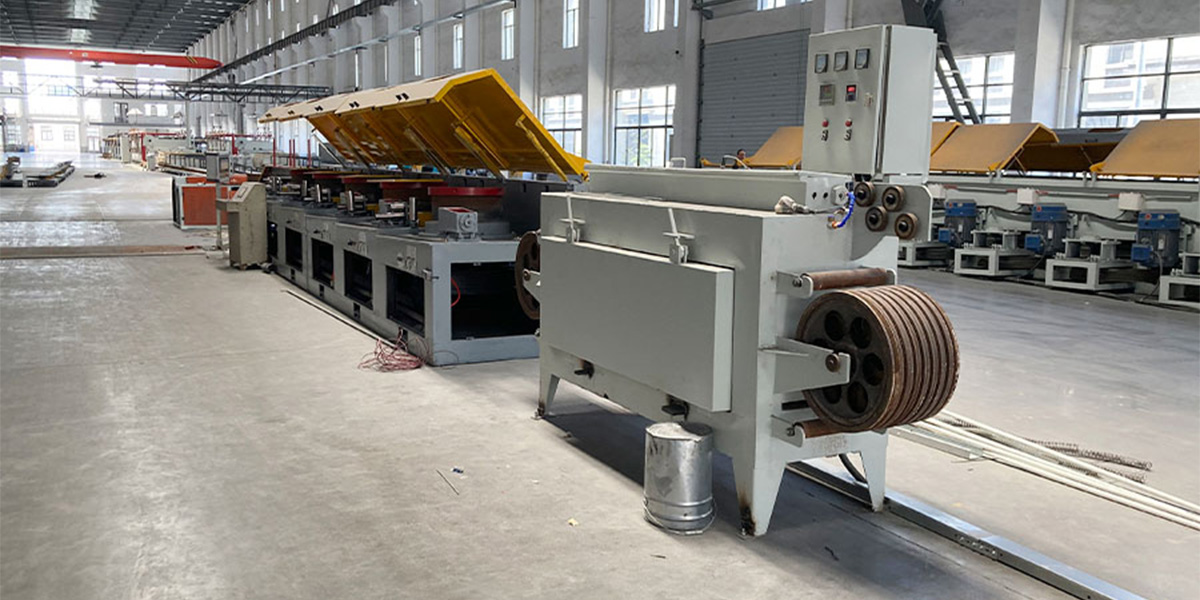
A wire drawing machine reduces the diameter of metal rod or wire by pulling it, cold, through one or more precisely shaped dies. A motor-driven drum (the capstan or drawing block) supplies the pulling force. The metal flows plastically in the die, so the wire comes out thinner, longer, and stronger. In a multi-die machine, each drum runs faster than the one before it, so the wire is reduced step by step to the target size at a stable tension.
- Wire drawing is cold drawing deformation: the wire is pulled through a die whose exit is smaller than the incoming wire.
- Every machine has the same core chain: pay-off → pre-treatment/lubrication → drawing dies → capstans (drawing blocks) → drive and tension control → take-up.
- Volume (mass flow) stays constant, so the wire speed rises at every pass in proportion to the reduction.
- Dry drawing (soap powder lubricant) suits rod breakdown and medium wire; wet drawing (oil or emulsion, submerged dies) suits fine and ultra-fine wire.
- Choosing the right machine depends on material, inlet and outlet diameter, line speed, number of passes, and output capacity, not on price alone.
What Is a Wire Drawing Machine?
A wire drawing machine is industrial equipment that converts hot-rolled or continuously cast rod into wire of a precise diameter, with controlled surface quality and mechanical properties. It is the first step in almost every wire supply chain: copper and aluminum conductors, steel wire for springs and fasteners, stainless steel wire, welding wire, rope wire, and many alloy wires all start on a drawing line.
The machine does not cut or remove material. It reshapes it. That is why drawn wire has tight diameter tolerance, a smooth surface, and higher tensile strength than the rod it came from.
The Working Principle: Cold Plastic Deformation
When wire is pulled into a die, the die’s tapered approach (reduction) zone squeezes the metal. The stress inside the wire exceeds its yield strength, so it deforms permanently instead of springing back. The material cannot escape sideways, so it elongates.
Three engineering ideas explain nearly everything that happens in the machine:
1. Constant volume. The cross-section shrinks and the length grows by the same proportion. Therefore:
Entry area × entry speed = Exit area × exit speed (A₀ · v₀ = A₁ · v₁)
This is why each drum in a multi-pass machine must turn faster than the previous one.
2. Area reduction. The reduction per pass is:
Reduction (%) = (A₀ − A₁) / A₀ × 100, where A is the cross-sectional area (for round wire, proportional to d²)
Worked example: drawing copper wire from 3.00 mm to 2.60 mm gives (2.60 / 3.00)² = 0.751, so the area reduction is about 24.9% and the elongation ratio is about 1.33. If the wire leaves the die at 10 m/s, it entered at about 7.5 m/s.
3. Drawing stress must stay below the strength of the exiting wire. The pulling force is carried by the wire that has already passed through the die, which has been strengthened by work hardening. If the reduction is too aggressive, or friction is too high, the wire breaks at the die exit. In an ideal frictionless case with a non-hardening metal, the theoretical limit is about 63% reduction per pass (1 − 1/e). Real machines run far lower, typically in the range of about 15–30% per pass depending on material, die design, lubrication, and the drawing method.
How many passes do you need? Going from 8.0 mm rod to 1.0 mm wire is a total area ratio of 64:1. At an average of 22% reduction per pass, that needs roughly 17 passes. This is the reason multi-die continuous machines exist.
Main Components of a Wire Drawing Machine
1. Pay-off (uncoiler)
Feeds rod or wire from a coil, bundle, or spool without kinking or tangling. Active pay-offs and dancer arms keep the entry tension steady.
2. Pre-treatment and lubricant system
Carbon steel rod must be cleared of scale before drawing. This is done by chemical pickling and coating (borax or phosphate) or by mechanical descaling, which avoids acid. Copper and aluminum rod are normally drawn bright, with emulsion or oil. The lubricant carries the wire into the die, lowers friction, controls heat, and protects the die.
3. Drawing dies and die boxes
The die is the heart of the process. A typical die has an entry bell, an approach (reduction) angle, a bearing (sizing) land, and a back relief. Choosing the wrong angle or bearing length shortens die life and causes surface defects.
- Tungsten carbide dies for steel and larger sizes
- Polycrystalline diamond (PCD) dies for long runs in copper and other non-ferrous metals
- Natural or synthetic single-crystal diamond dies for fine and ultra-fine wire
In dry drawing, the die sits in a die box filled with soap powder (stearate-based lubricant). In wet drawing, dies run in a flooded, cooled lubricant bath.
4. Capstans (drawing blocks / drums)
The capstan is the driven drum that pulls the wire. The wire is wrapped around it for several turns, and friction transfers the pulling force. Capstans are water-cooled, because drawing heat is considerable, and their surface is wear-resistant (hardened steel, tungsten carbide coating, or ceramic) to resist the wire’s abrasive action.
5. Drive system and tension control
Modern machines use AC motors with variable frequency drives, or servo direct-drive systems that remove gearbox losses and improve speed synchronization. A PLC controls the speed ratio between stages so every pass stays in balance with its reduction. Tension is stabilized with dancer arms, tension sensors, or closed-loop speed compensation, depending on the machine type.
6. Take-up (spooler, coiler, or inverted block)
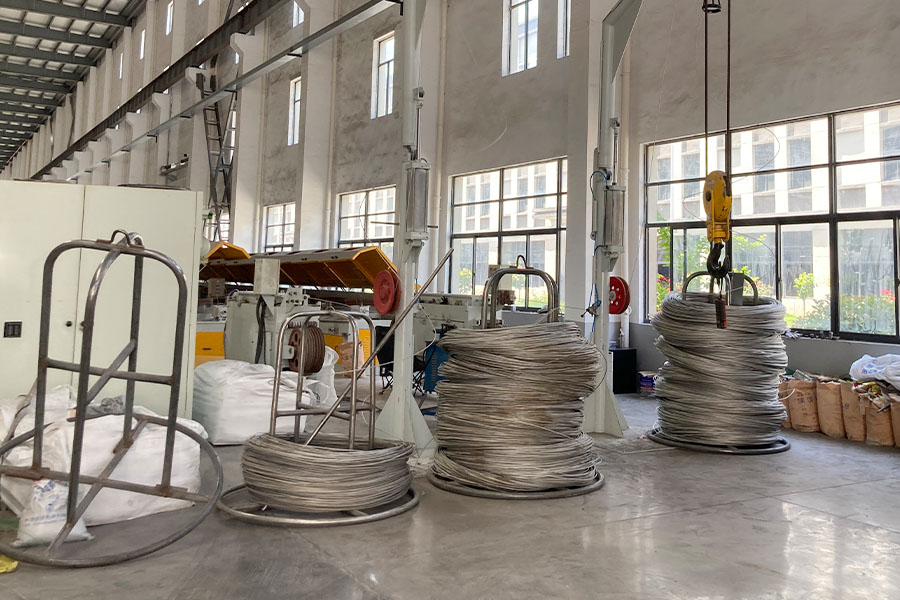
The finished wire is wound on spools, pay-off baskets, or coils. On many machines the last stage includes automatic spool change to keep the line running.
7. Cooling, safety, and electrical control
Water circuits for dies and capstans, wire-break detection, emergency stops, guards, and an HMI for recipe and speed management complete the machine.
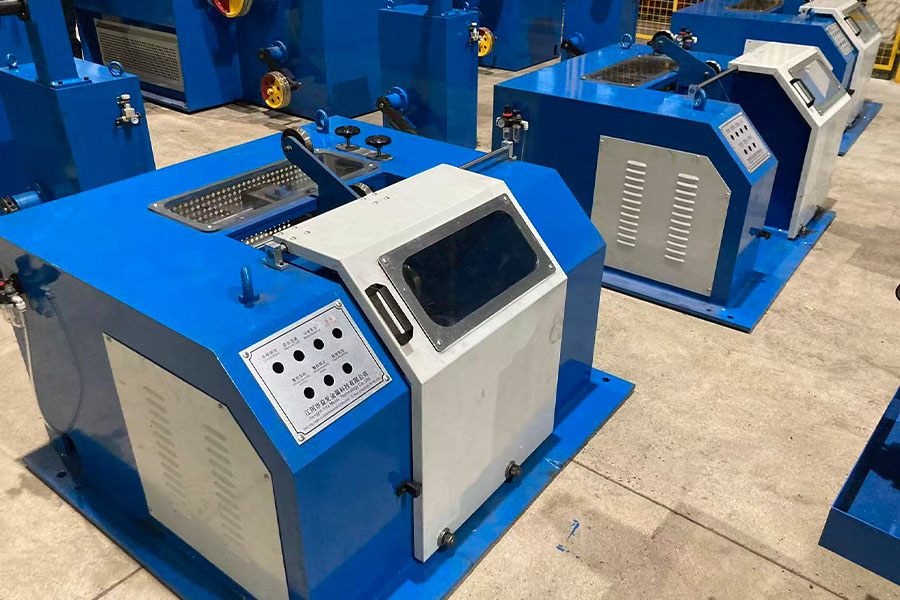
Step-by-Step: How the Wire Moves Through the Machine
- Loading: The rod or wire is mounted on the pay-off and threaded through the first die.
- Pointing and threading: The wire’s end is pointed (tapered) so it can pass through the die, then wrapped onto the first capstan.
- Lubricated reduction: The wire is drawn through the die. The metal flows plastically, and the wire gets thinner and longer.
- Capstan pull: The capstan grips the wire by friction and pulls the next section forward.
- Repeat in series: The wire proceeds through the next die and capstan. Each capstan runs faster than the last, matching the constant-volume rule.
- Optional in-line treatment: On fine copper and some alloy lines, an in-line annealer restores ductility after heavy cold work. For high-carbon steel, patenting (heat treatment) is done before or between drawing stages.
- Take-up: The wire is wound at controlled tension onto a spool or into a coil.
Slip vs. Non-Slip Drawing
- Slip-type machines (common for copper and aluminum): the wire can slide slightly on the capstan, and the speed ratio is set slightly higher than the theoretical value. This design is forgiving and suits continuous multi-wire drawing, but it demands careful capstan surface care.
- Non-slip (accumulating or tandem) machines: the wire is held on the capstan without slipping, and speed control keeps pace with the reduction. This is typical for steel wire, where tension must be precisely managed.
Dry vs. Wet Wire Drawing
| Feature | Dry drawing | Wet drawing |
|---|---|---|
| Lubricant | Solid soap powder in a die box | Oil or emulsion, dies submerged |
| Typical use | Rod breakdown, carbon steel, medium and coarse wire | Fine and ultra-fine wire, stainless steel, copper, alloys |
| Cooling | Capstan and die water cooling | Lubricant bath also cools wire and dies |
| Surface result | Good, matte finish | Very smooth, bright finish |
| Machine cost | Lower | Higher (liquid-tight construction, filtration) |
Main Types of Wire Drawing Machines
| Machine type | How it works | Typical applications |
|---|---|---|
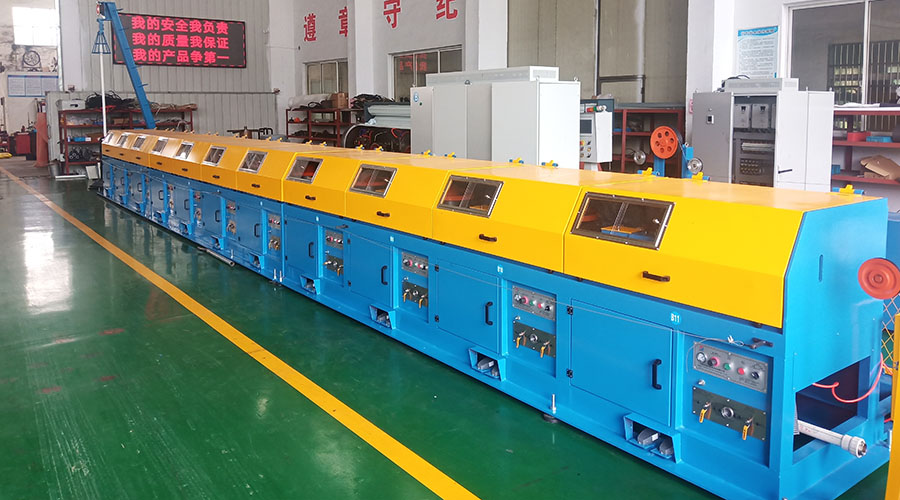
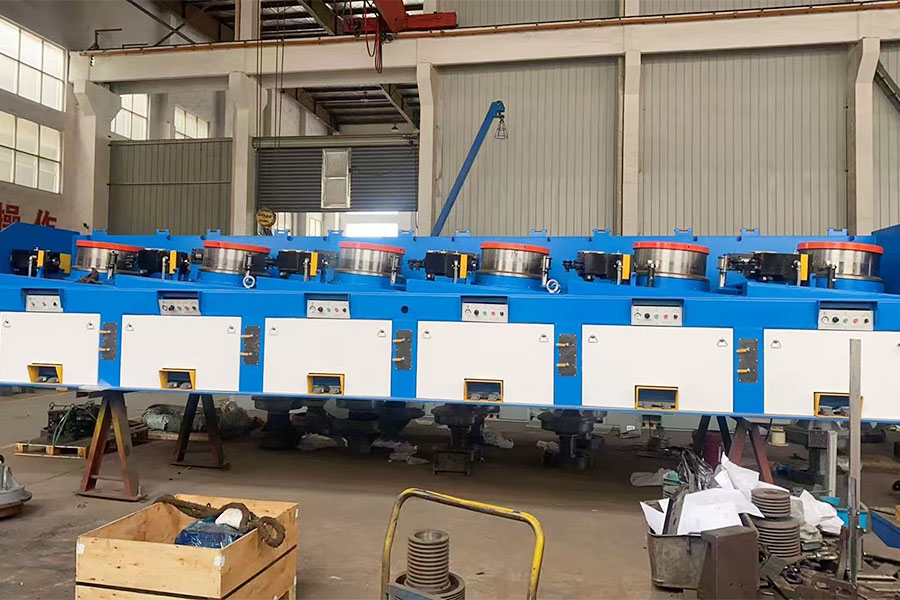
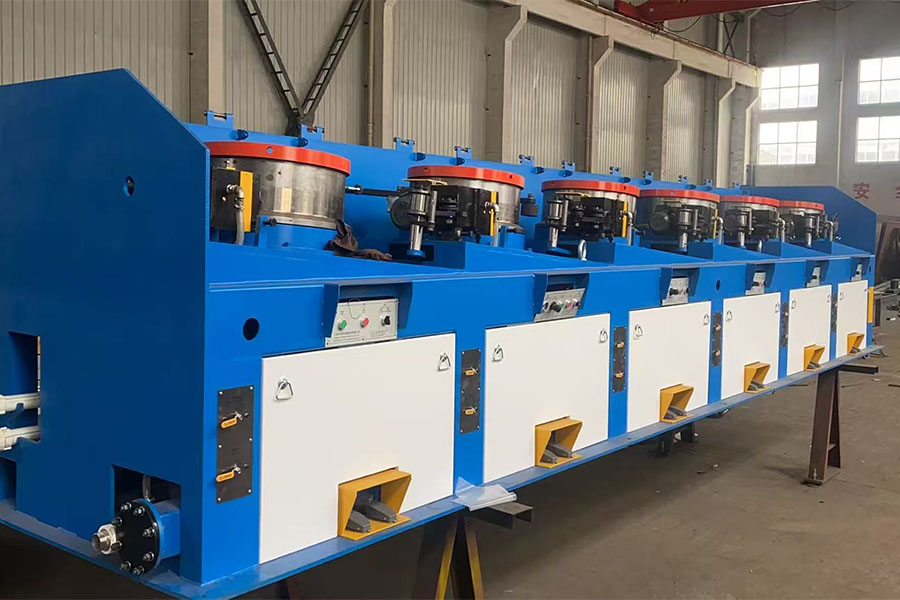
| Straight line wire drawing machine | Wire passes in a straight line through dies and capstans; the wire is not bent over each pass, which reduces bending stress on the wire. | High-carbon, stainless and alloy steel wire; welding wire; spring wire |
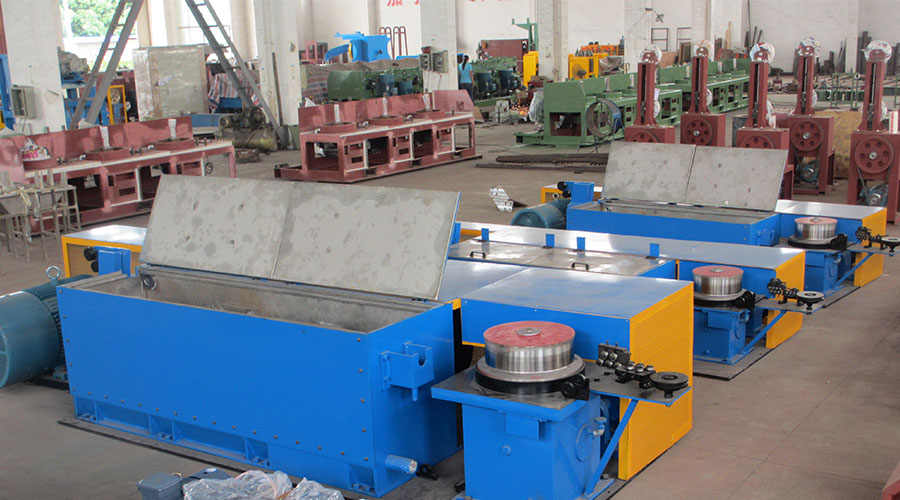
| Wet wire drawing machine (fine / ultra-fine) | Many small dies submerged in lubricant; multi-pass continuous reduction. | Copper and alloy fine wire, stainless fine wire |
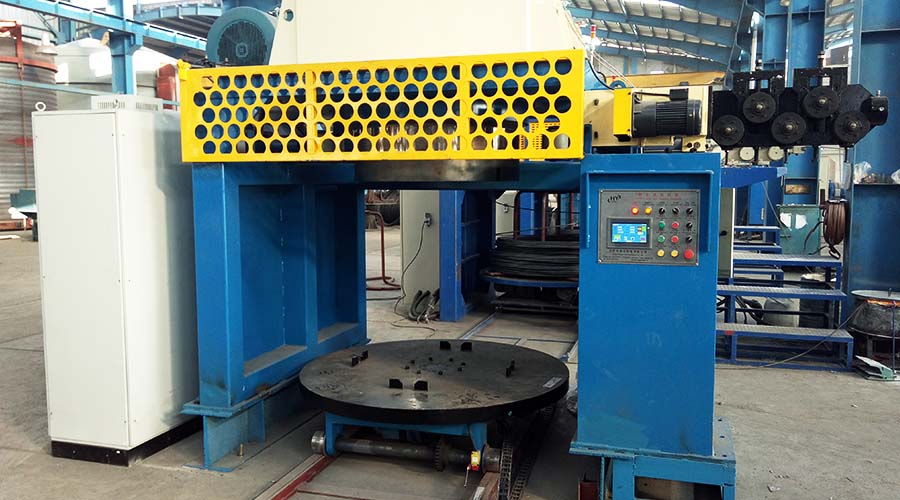
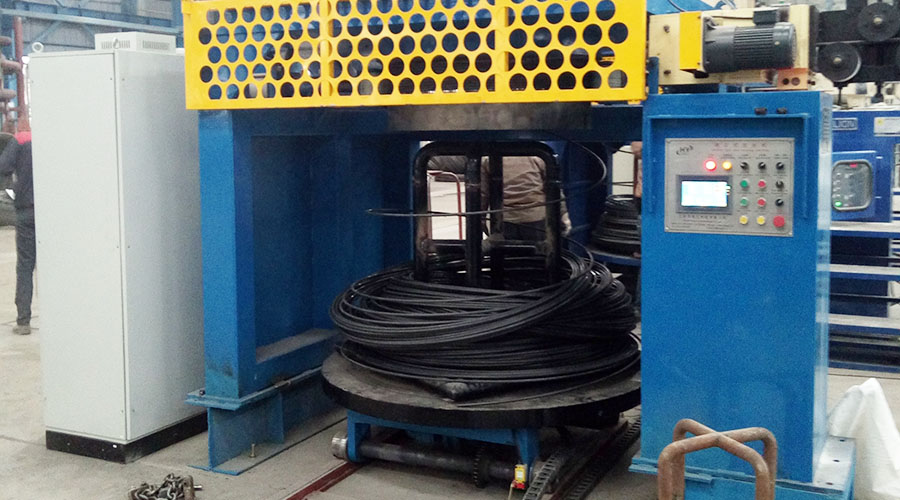
| Inverted (vertical) wire drawing machine | The drum is vertical and the wire is drawn upward; the drawn wire is stripped off by an inverted block. | Single-block drawing of steel and non-ferrous wire, coil-to-coil |
| Bull block / single-block machine | One die and one drum, with the wire collected on the drum itself. | Heavy reductions, special profiles, small production runs |
| Rolling cassette (roller die) machine | Replaces fixed dies with rollers to lower friction. | Hard-to-draw alloys and profiled wire |
| Drawing and annealing line | Combines continuous drawing with in-line annealing. | Bare and tinned copper conductors |
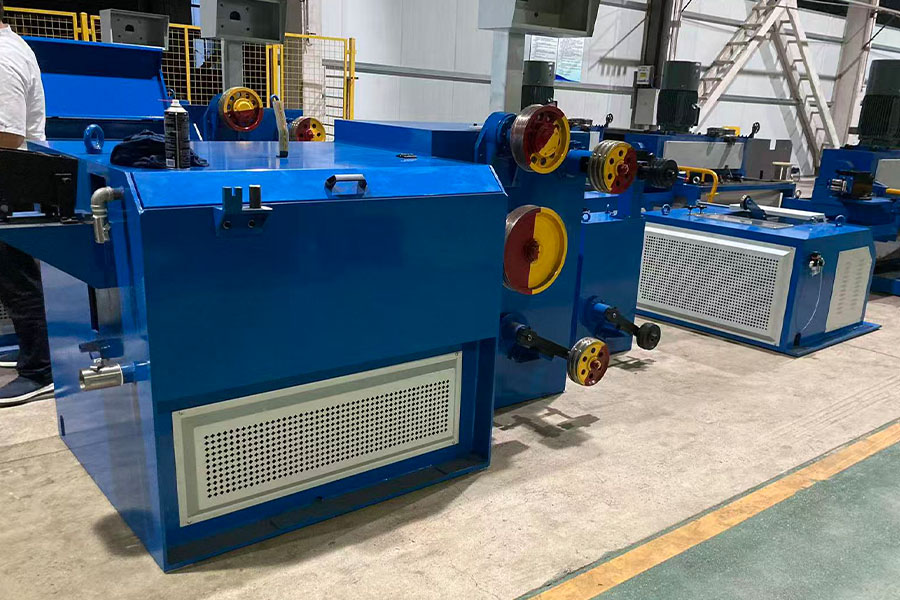
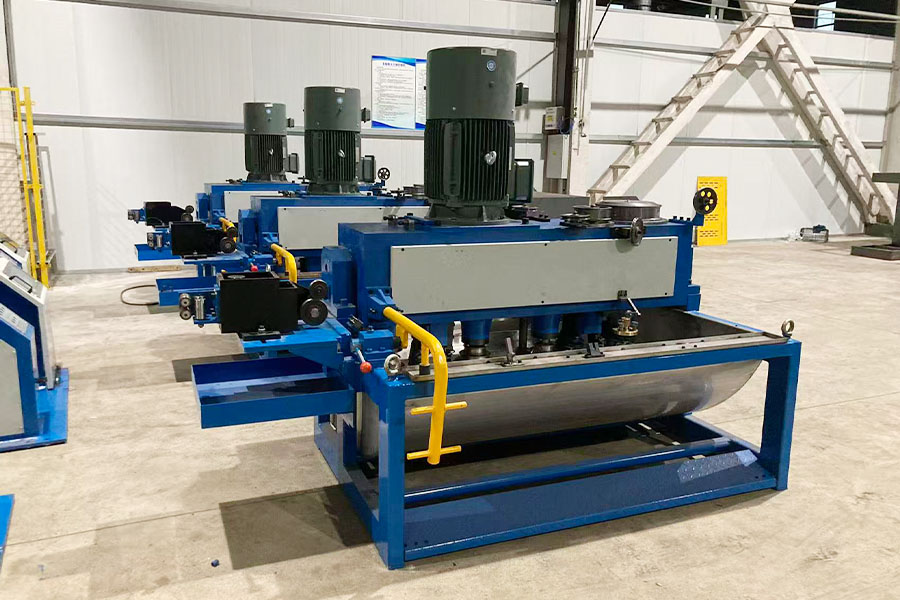
Advanced Drawing Technologies
Manufacturers continue to improve drawing efficiency and wire quality. Among the technologies used in modern high-end lines are:
- Acid-free (mechanical descaling) drawing: cleans scale without acid pickling, reducing chemical waste.
- Rotary die drawing: the die rotates, which can improve wire roundness and reduce wear.
- Ultrasonic-assisted drawing: ultrasonic vibration lowers friction and drawing force, which can support finer wire and difficult alloys.
- Servo direct-drive drawing: precise, energy-efficient speed control with fewer mechanical parts to wear.
What Determines Wire Quality?
| Factor | Why it matters |
|---|---|
| Die geometry and condition | Wrong angle or worn bearing causes oval wire, scratches, and breaks |
| Reduction schedule | Uneven pass reductions overload one die and shorten its life |
| Lubricant condition | Contaminated or overheated lubricant raises friction and surface defects |
| Cooling | Hot wire loses lubricant film and gains brittleness |
| Speed synchronization | Poor ratio between stages creates slack, tension spikes, and breaks |
| Incoming rod quality | Surface cracks and inclusions in rod show up as breaks in fine wire |
Common Problems and Practical Fixes
- Frequent wire breaks: check rod quality, over-reduction on the first passes, die wear, and tension spikes between stages.
- Scratches or a rough surface: inspect dies for chips, check lubricant cleanliness, and clean capstan surfaces.
- Oval wire or poor roundness: replace worn dies and check die alignment and the pass schedule.
- Rapid die wear: review die material choice, lubrication, and the speed of the machine.
- Slip marks on the capstan: adjust the speed ratio or the number of wraps, and re-check capstan surface condition.
Daily and Periodic Maintenance
- Check and replace dies before they drift outside diameter tolerance.
- Keep lubricant filtered, at the correct concentration and temperature.
- Inspect capstan surfaces for grooves and polish or replace them as needed.
- Verify cooling water flow and temperature.
- Calibrate tension sensors and speed ratios on a regular schedule.
- Lubricate bearings and gearboxes per the manufacturer’s manual.
How to Choose a Wire Drawing Machine ?
Before requesting a quotation, define:
- Material: copper, aluminum, low/medium/high carbon steel, stainless steel, or special alloy.
- Inlet and outlet wire diameter: this decides the number of passes and the machine class.
- Required output capacity (kg/h or t/day) and line speed.
- Wire specification: tensile strength, tolerance, and surface requirement.
- Process route: dry or wet drawing, in-line annealing, or coil-to-coil.
- Automation level: automatic spool change, recipe storage, and remote monitoring.
- After-sales support: installation, commissioning, operator training, and spare dies and parts.
A reliable machine builder will ask you for these data first, and will also review your rod and finished-wire standards, instead of quoting a model off a catalog.
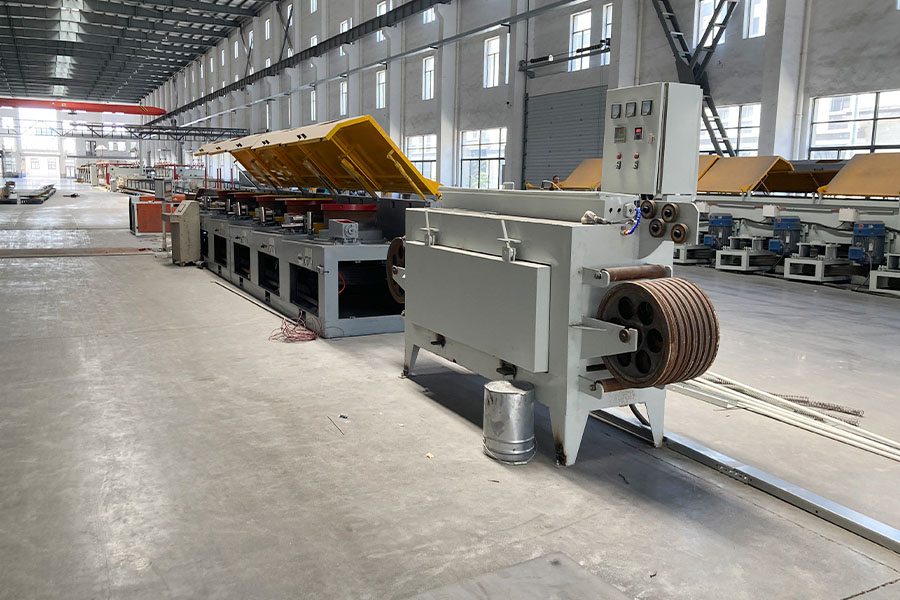
Why Work with a Wire Drawing Machine Manufacturer?
Buying directly from a manufacturer gives you control over machine design, drive and tension configuration, die system, and the service that follows. YF Metal Tech designs, manufactures, installs, and commissions wire drawing machines and complete wire drawing lines, including straight line, wet, vertical, rolling cassette, and automatic machines, together with auxiliary equipment. Share your material, size range, and capacity, and our engineers will recommend a configuration for your production.
Request a quotation or technical consultation →
Frequently Asked Questions
1. How does a wire drawing machine work in simple terms?
It pulls metal rod or wire through a die with a hole smaller than the wire. The metal is squeezed, becomes thinner and longer, and gets stronger. A rotating drum, the capstan, provides the pulling force.
2. What are the main parts of a wire drawing machine?
Pay-off, lubrication or die box, drawing dies, capstans (drawing drums), a drive and tension control system, cooling, and a take-up unit.
3. What is the difference between dry and wet wire drawing?
Dry drawing uses solid soap powder as the lubricant and is used for rod breakdown and medium to coarse wire. Wet drawing submerges the dies in oil or emulsion, giving better cooling and lubrication for fine and ultra-fine wire at higher speed.
4. Why does the wire get stronger after drawing?
Cold deformation creates and multiplies dislocations in the metal’s crystal structure, which makes it harder to deform further. This is called work hardening. It raises strength but lowers ductility, which is why some wires need annealing.
5. How much can wire be reduced in one pass?
It depends on the material, die, and lubrication. Many commercial processes run at around 15–30% area reduction per pass. Higher reductions risk breaks and rapid die wear.
6. What materials can a wire drawing machine process?
Copper, aluminum, brass, bronze, low-, medium- and high-carbon steel, stainless steel, nickel and titanium alloys, and many precious and special metals, with machine configuration chosen for each material.
7. What is a straight line wire drawing machine?
A machine where the wire runs in a straight line through a series of dies and capstans. Because the wire is not bent between passes, it is well suited to high-strength and stainless wire at stable tension.
8. What affects the price of a wire drawing machine?
Material and wire size range, number of dies and capstans, line speed and capacity, drive type (VFD or servo), die and lubricant system, automation level, and after-sales scope.