Tungsten Carbide Wire Drawing Die – Precision Carbide Drawing Dies by YF Metal Tech
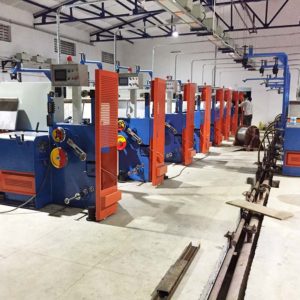
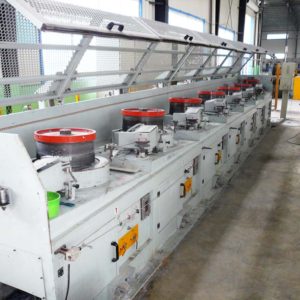
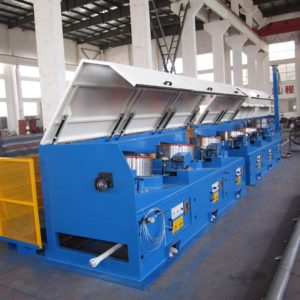
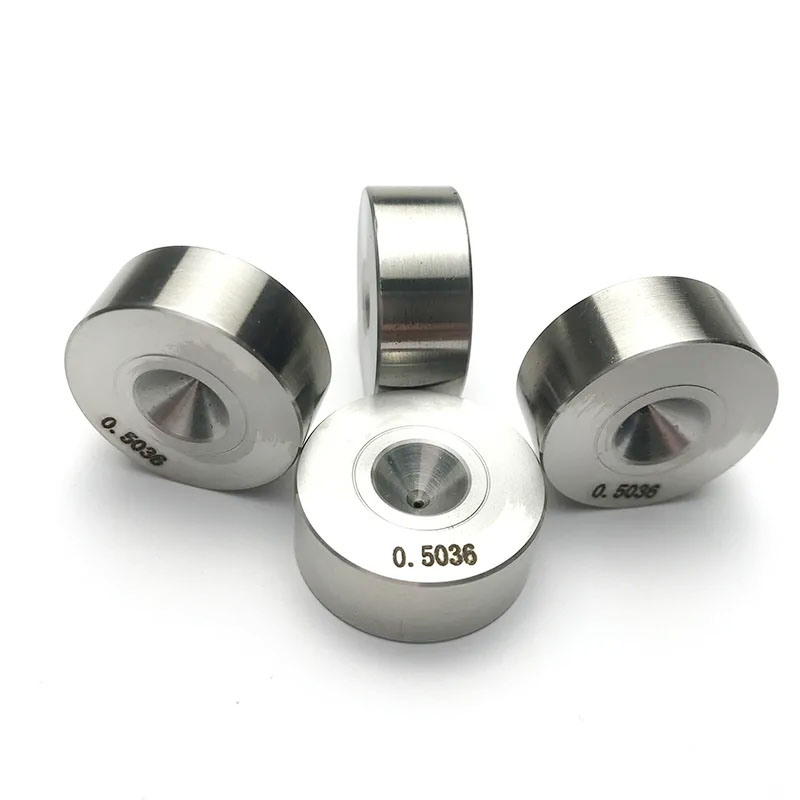
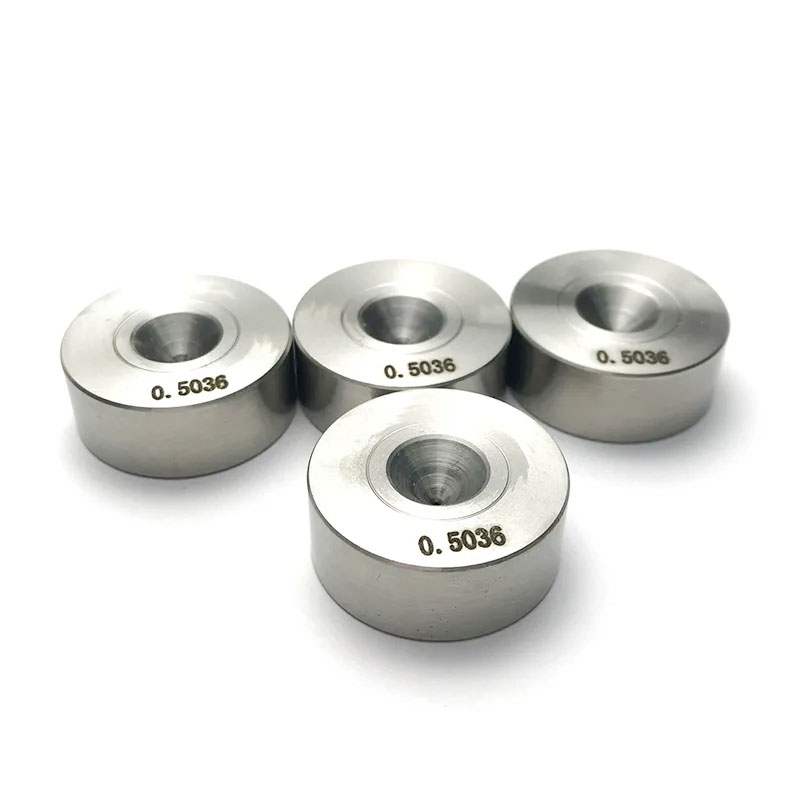
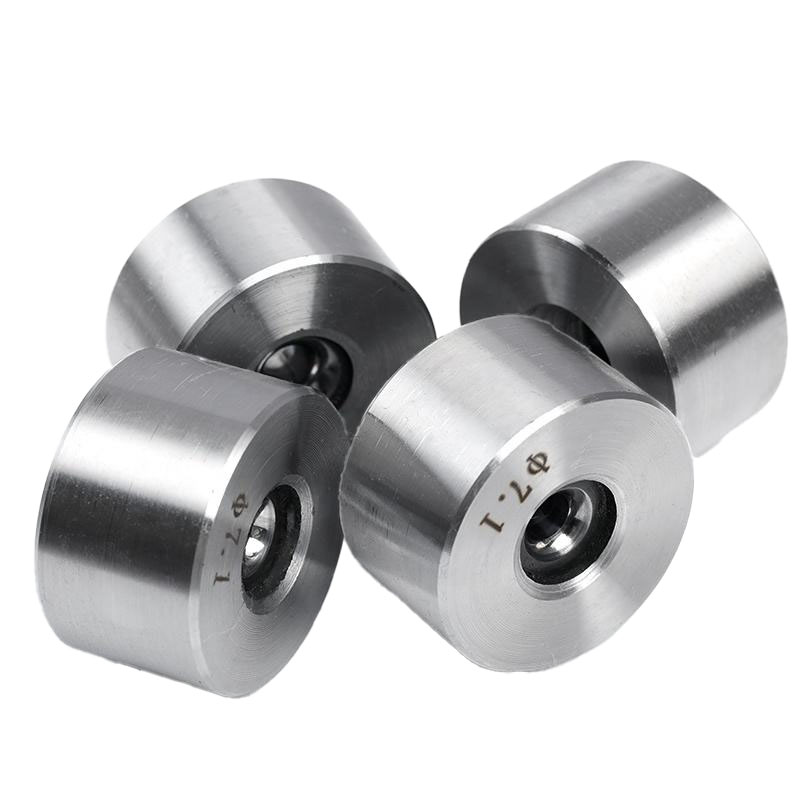
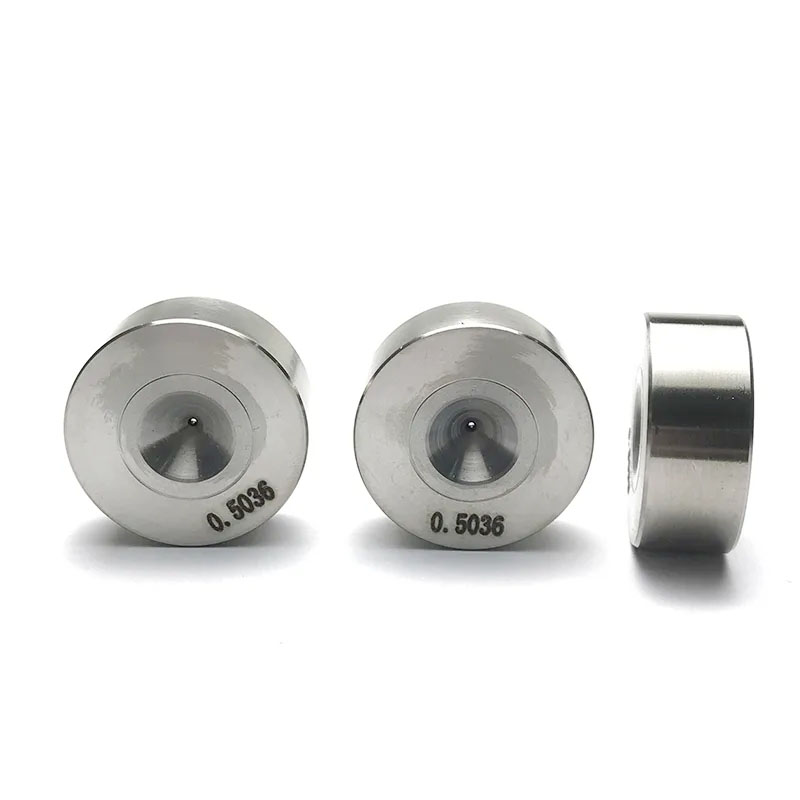
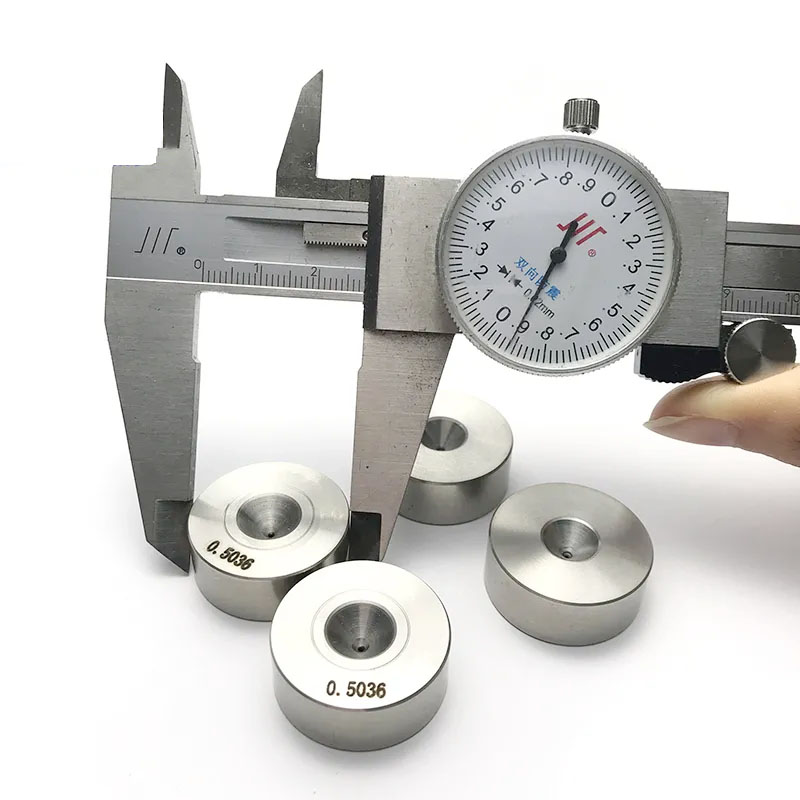
YF Metal Tech supplies tungsten carbide wire drawing dies for steel, stainless steel, copper, aluminum and alloy wire. A tungsten carbide (cemented carbide) drawing die has a nib of tungsten carbide grains bonded with cobalt, so it combines high hardness with enough toughness to handle heavy reductions and different wire sizes at a moderate price. We have built wire drawing machines for more than 30 years, and we choose the carbide grade, bore geometry and polish of every die around the way your line actually runs: wire material, drawing speed, lubricant and reduction per pass.
Tungsten Carbide Drawing Die at a Glance
| Item | Details |
|---|---|
| Die material | Cemented tungsten carbide (WC-Co), (grades offered, e.g. YG6A, K20,YG6X, K10,YG8, K30,YG12, K30-K40,YG15, K30-K40,YG20 ) |
| Typical wire materials | Carbon steel, stainless steel, copper, aluminum, alloy and plated wire |
| Drawing process | Wet and dry drawing; pressure and non-pressure dies |
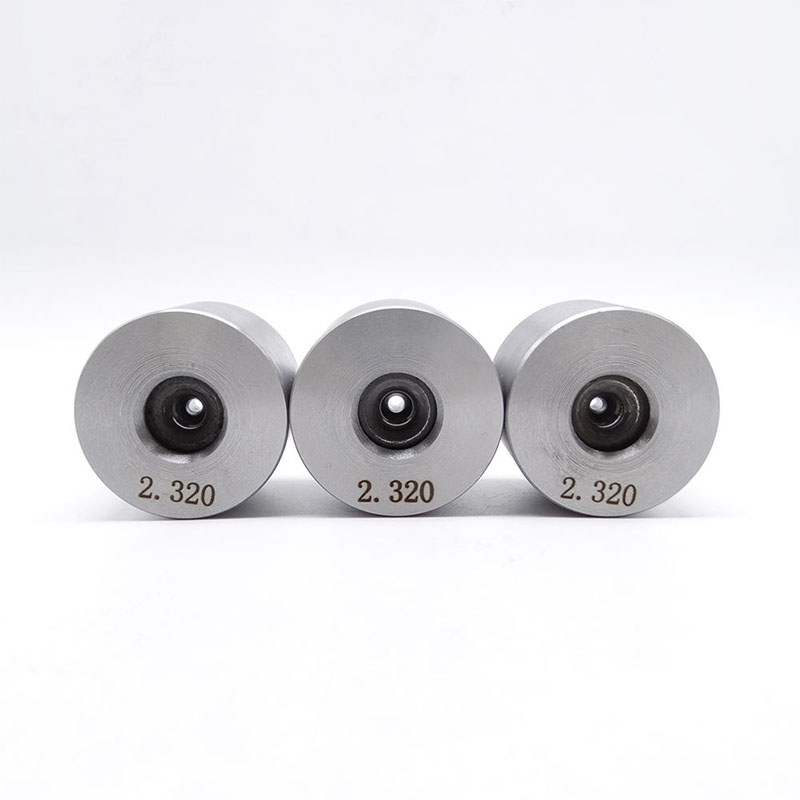
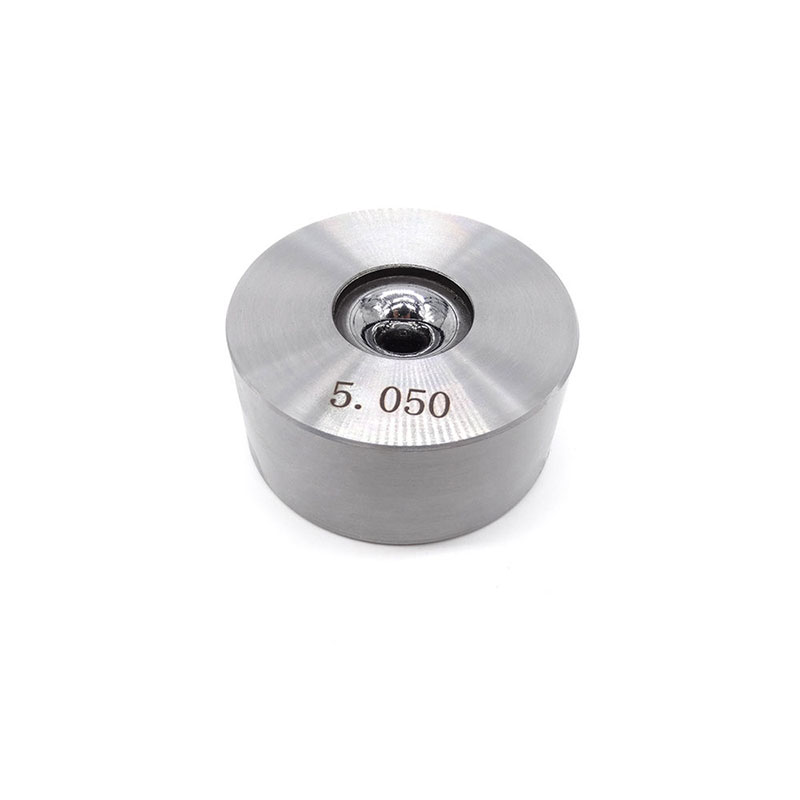
| Configurations | Carbide nib in a steel or stainless casing; finished dies or die blanks |
| Bore size range | 0.15–0.5 mm ~ 70.00–76.00mm |
| Customization | Grade, bore size, reduction angle, bearing length, casing size and polish, on request |
| Typical use | Steel wire rope, twisted wire, low carbon steel wire, high carbon steel wire, stainless steel wire,cutting wire, steel curtain wire, welding wire, copper wire, aluminum wire, iron pipe, copper pipealuminum pipe, stainless steel pipe, etc. |
Why Choose Tungsten Carbide Wire Drawing Dies?
1. Proven all-round performance at a sensible cost
Tungsten carbide is the most widely used drawing die material because it balances hardness, toughness and price. For most standard wire and for medium-length runs, it gives a lower purchase cost than diamond dies while still holding size well.
2. A grade for every wire
By changing cobalt content and grain size, we can tune the same material from very hard and wear-resistant to tougher and impact-resistant. That is how one die family covers fine steel wire, general non-ferrous wire and heavy-duty coarse wire.
3. Easy to rework
When a carbide die wears, the bore can often be re-lapped and polished back into shape and used again at a slightly larger size, so the die keeps earning after its first life.
4. Wide size range and ready supply
Carbide dies are practical from large rod-breakdown sizes down to fine wire, so one supplier can cover most positions on a multi-die machine. 【Add your stock sizes and lead time】
Tungsten Carbide Wire Drawing Die Technical Specification
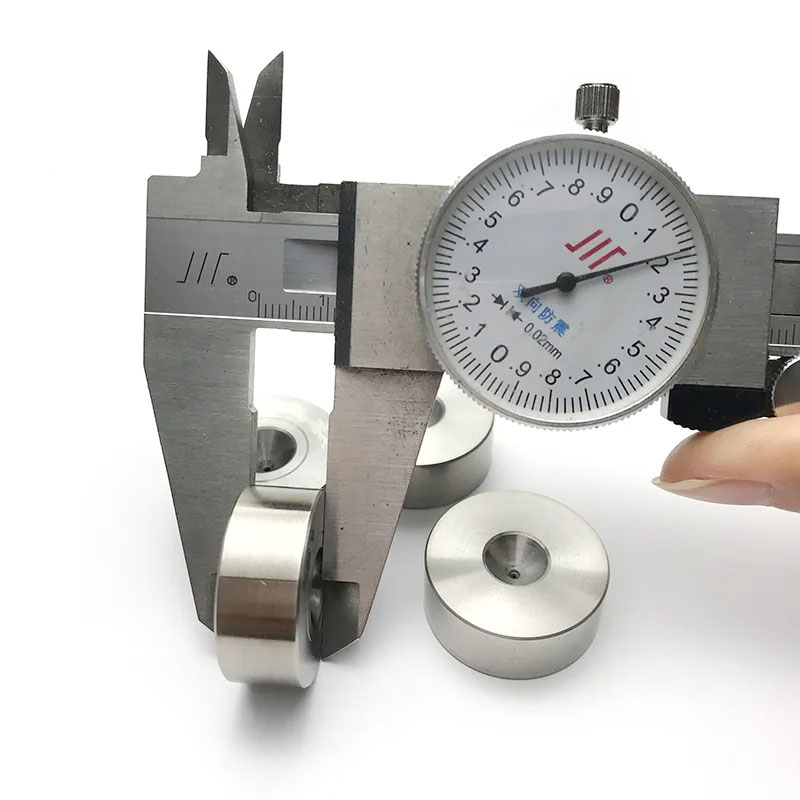
We supply both finished wire drawing dies with steel cases and tungsten carbide blank nibs.
| Inner size (mm) | Size of carbide (mm) | Recommendation steel size (mm) | Tolerance (mm) |
| 0.15–0.5 | 9*6 | 25*12 | -0.01/0 |
| 0.5–2.6 | 13*10 | 30*16 | -0.01/0 |
| 0.8–3.5 | 16*13 | 32*23 | -0.01/0 |
| 1.0–3.5 | 16*14 | 32*23 | -0.01/0 |
| 1.5–6.5 | 20*17 | 40*25 | -0.01/0 |
| 1.8–6.5 | 22*18 | 40*26 | -0.01/0 |
| 3.0–9.5 | 25*20 | 50*28 | -0.01/0 |
| 5.5–12.5 | 30*22 | 70*35 | -0.02/0 |
| 8.5–16.5 | 35*25 | 75*35 | -0.02/0 |
| 12.5–16.5 | 38*25 | 80*35 | -0.02/0 |
| 16.5–21.5 | 40*25 | 85*35 | -0.02/0 |
| 21.5–24.5 | 50*28 | 110*45 | -0.03/0 |
| 24.5–34.5 | 60*35 | 120*50 | -0.03/0 |
| 34.5–43.5 | 70*35 | 130*60 | -0.035/0 |
| 43.5–45.5 | 80*35 | 140*60 | -0.035/0 |
| 45.5–51.00 | 90*35 | 150*60 | -0.05/0 |
| 51.00-56.00 | 100*40 | 160*75 | -0.05/0 |
| 57.00–65.00 | 110*40 | 170*75 | -0.05/0 |
| 66.00–69.00 | 120*45 | 180*80 | -0.05/0 |
| 70.00–76.00 | 130*50 | 190*85 | -0.05/0 |
Need a size that is not listed? Send us the case and pellet dimensions or a sample die and we will quote to match.
Choosing the right carbide grade for low carbon steel wire
| Grade | ISO grade | Grain size | Binder | density | Hardness | T.R.S |
| (um) | (g/cm³) | (HRA) | (N/mm2) | |||
| YG6A | K20 | 0.8 | 6 | ≥15.10 | ≥91.5 | ≥1580 |
| YG6X | K10 | 1 | 6 | ≥15.00 | ≥91.0 | ≥1880 |
| YG8 | K30 | 1.5 | 8 | ≥14.80 | ≥89.5 | ≥2020 |
| YG12 | K30-K40 | 1.5 | 12 | ≥14.50 | ≥88.0 | ≥2600 |
| YG15 | K30-K40 | 1.5 | 15 | ≥14.00 | ≥87.0 | ≥2900 |
| YG20 | 1 | 20 | ≥13.80 | ≥86.0 | ≥2600 |
The trade-off is simple: more cobalt gives a tougher die that resists cracking, less cobalt gives a harder die that resists wear. How we apply it to low carbon steel:
- YG8 (general-purpose choice). The best balance of wear resistance and toughness. Our usual starting grade for dry drawing of low carbon steel wire.
- YG6X / YG6A (wear-resistance choice). Finer grain and higher hardness. Suited to intermediate and finishing dies, smaller diameters and steady, well-lubricated drawing where holding size and surface finish matter most.
- YG12 / YG15 (toughness choice). For coarse breakdown dies, heavy reductions, uneven entry or shock loads, and wherever cracking rather than wear is the failure you see. Expect faster wear than YG8.
- YG20. Highest toughness and lowest hardness, reserved for severe impact conditions.
Hardness and strength values above are minimum values for our standard grades. The final grade is confirmed against your rod, speed, lubricant and wear pattern.
How to Choose the Carbide Grade: Cobalt Content and Grain Size
In cemented carbide, cobalt is the binder that holds the tungsten carbide grains together. More cobalt gives a tougher, more shock-resistant die but lowers hardness and wear resistance. Finer grains give higher hardness and a finer polish, coarser grains give more toughness. Grade names differ between makers, so treat the table as a guide and ask us to confirm a grade for your wire.
| Grade type | Typical cobalt content | Main strength | Suitable for |
|---|---|---|---|
| Low cobalt, fine grain (ISO K01-type) | About 3% | Highest hardness and wear resistance, lower toughness | Fine steel wire, small bores, high surface-finish requirements |
| Medium cobalt (ISO K10-type, YG6-type) | About 6% | Balance of hardness and toughness | General-purpose; wide range of wire, especially non-ferrous |
| Higher cobalt (ISO K20-type, YG8 and above) | About 8% and higher | Higher toughness and impact resistance | Larger and coarser wire, heavy reductions, heavy-duty use |
【Replace with your own grade codes and add certified hardness and transverse rupture strength values from your test reports.
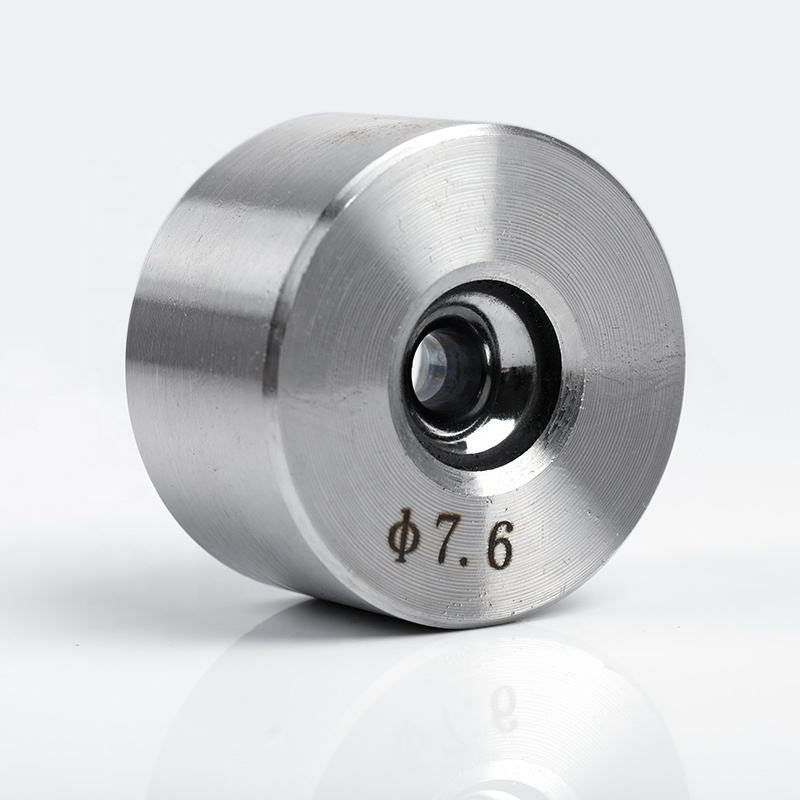
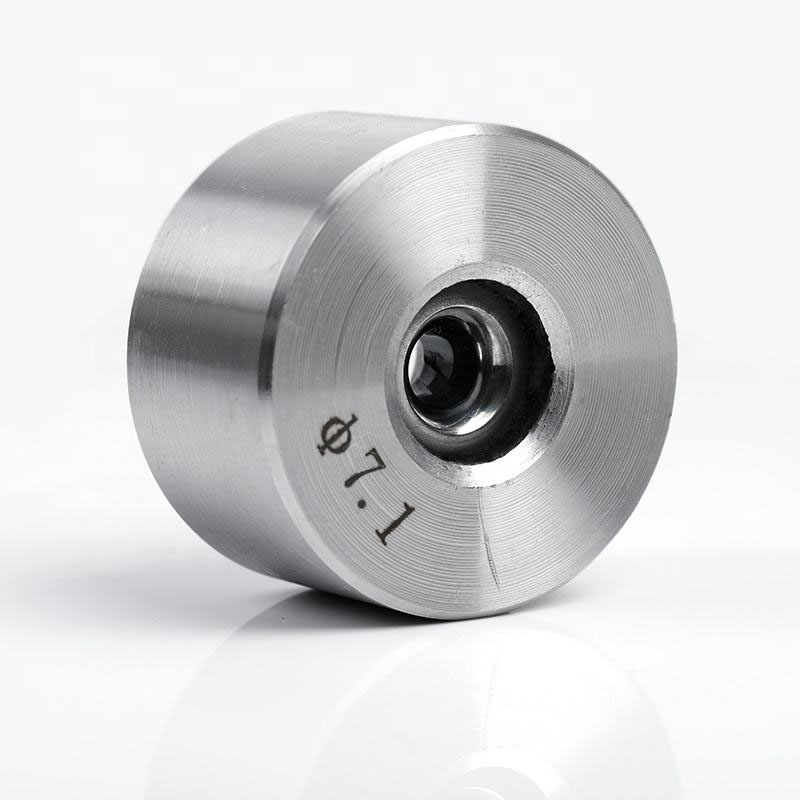
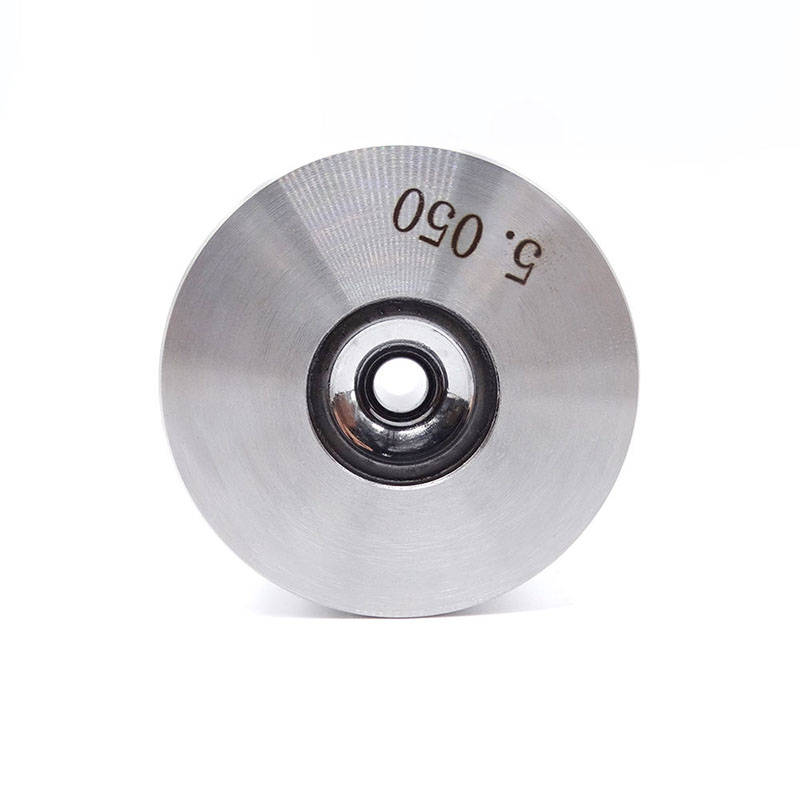
Tungsten Carbide vs PCD Drawing Dies
| Property | Tungsten carbide die | PCD (polycrystalline diamond) die |
|---|---|---|
| Purchase price | Lower | Higher |
| Wear resistance | Good; wears faster on abrasive wire | Much higher; commonly many times carbide life |
| Toughness against shock | Higher | Lower than carbide, but better than single-crystal diamond |
| Bore sizes | Practical from rod size to fine wire | Small to large, higher cost per die |
| Reworking | Often can be re-lapped to a larger size | Possible, but needs diamond tooling |
| Best use | Rod breakdown, short and medium runs, cost-sensitive work | Long runs, abrasive wire, tight roundness |
The fair comparison is cost per ton of wire drawn, not price per die. Add the die price and the downtime for changeovers, then divide by the tonnage drawn before the wire leaves tolerance. Carbide usually wins on short and medium runs and on early passes. PCD usually wins on long runs of abrasive wire. If your line is in the second group, see our PCD drawing die page.
Carbide Drawing Die Design: Bore Geometry That Controls Wire Quality
The bore of a drawing die is divided into zones, and each one has a job. Getting the geometry right matters as much as choosing the grade.
| Bore zone | Function | What we match to your process |
|---|---|---|
| Entrance (bell mouth) | Guides the wire in and carries lubricant into the die | Bell shape and polish for your lubricant and speed |
| Reduction zone (approach angle) | Does the actual diameter reduction | Angle chosen for wire material and reduction per pass |
| Bearing (land) | Sets the final diameter and holds size | Bearing length for tolerance and die life |
| Back relief (exit) | Lets the wire leave the die cleanly | Exit angle so the wire does not scratch on the way out |
Reduction angle and bearing length depend on the wire material and how much the cross-section is reduced. For small reductions, a more acute reduction angle and a longer bearing than usual are generally used. We set these values from your drawing schedule instead of using one standard profile for every pass.
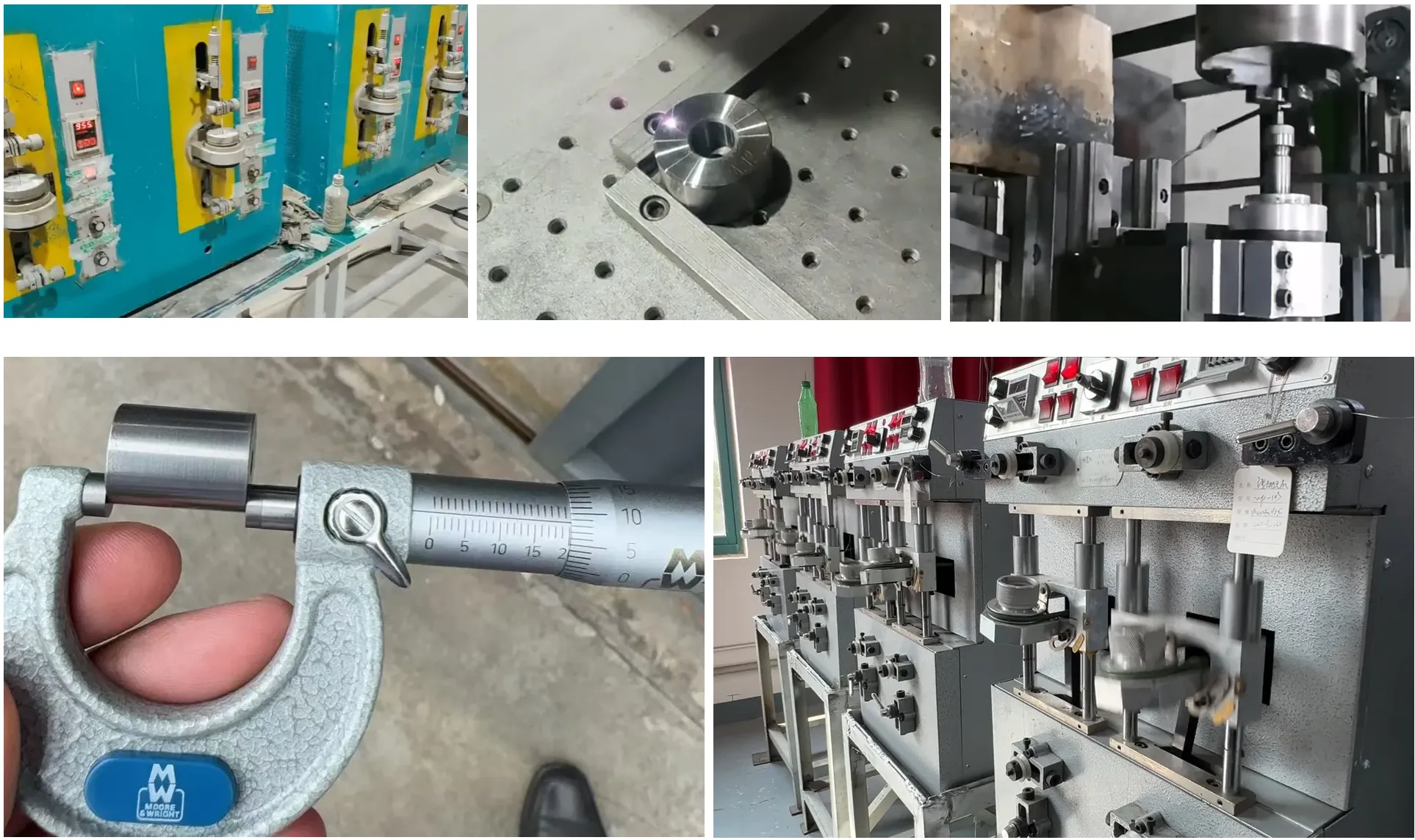
Our manufacturing process
- Grade selection. We choose cobalt content and grain size for the wire and the die position.
- Forming and sintering. The carbide nib is pressed with its bore pre-formed and sintered to full density.
- Bore finishing. The bore is lapped to the specified angles with diamond compound, then polished. Polish quality at the reduction zone and bearing directly affects wire surface and die life.
- Mounting. The nib is fitted into its steel or stainless casing with controlled stress.
- Inspection. Each die is checked before shipment.
Applications: What Wire Can You Draw With Carbide Dies?
| Wire type | Recommended grade direction | Notes from our drawing experience |
|---|---|---|
| Fine carbon and stainless steel wire | Low cobalt, fine grain | Hardness and polish matter most; keep reductions steady |
| Welding wire (including copper-coated) | Medium cobalt | Plating layer is abrasive; check wear and rework early |
| Spring wire and high-carbon wire | Low to medium cobalt | High drawing force; match the reduction angle to the schedule |
| Copper and copper alloy wire | Medium cobalt | General-purpose choice for rod breakdown and intermediate passes |
| Aluminum and aluminum alloy wire | Medium cobalt | Good lubrication prevents pickup on the bearing |
| Large-diameter or coarse wire, heavy reductions | Higher cobalt | Toughness resists chipping from shock and heavy load |
For long runs of abrasive wire, or when roundness must stay tight for a long time, consider a PCD drawing die for those positions and keep carbide for the rest of the line.
How to Select a Tungsten Carbide Drawing Die?
To recommend a grade and geometry we need the following. If you only have part of it, send what you have and we will ask for the rest.
- Wire material, hardness and coating.
- Incoming and finished diameter, and the reduction per pass.
- Drawing speed and machine type, wet or dry drawing.
- Lubricant type and whether the die box is pressurized.
- Required diameter tolerance and surface finish.
- Expected monthly tonnage, so we can compare cost per ton.
Quality Control
Every die is checked for bore diameter, roundness, reduction angle, bearing length, nib bonding and bore surface before shipment. Batch records are kept so a repeat order matches the previous die.
Custom Carbide Drawing Dies: Order Process
- Send your wire data or drawing, or a sample die.
- Our engineers confirm grade, geometry and casing and send a quotation with drawing.
- We produce and inspect the dies. Typical lead time is 7 days; minimum order is 10 pcs.
- Dies ship in protective packaging, with an inspection report on request.
We also supply dies together with our wire drawing machines, so machine and die are matched from the start.
Extending Carbide Die Life: Wear Signs, Reworking and Care
Three signs show a die is wearing out: the wire diameter drifts toward the upper tolerance, a ring or groove forms in the bearing, and drawing force or temperature rises. Catch wear early, because the less material that has to be removed to restore the bore, the more times the die can be reworked. When a die is re-lapped, the reduction angle must stay accurate, since even a small deviation can cut its life sharply. Keep lubricant clean and at the right concentration, align the wire so it enters on the die axis, and avoid wire breaks and sudden starts that load the nib.
Tungsten Carbide Drawing Die FAQ
1. What is a tungsten carbide wire drawing die?
It is a drawing die whose working nib is cemented tungsten carbide, made of tungsten carbide grains bonded with cobalt. Wire is pulled through its polished bore to reduce diameter and set the final size.
2. How do I choose between low-cobalt and high-cobalt carbide?
Low cobalt gives higher hardness and wear resistance, which suits fine and hard wire. Higher cobalt gives more toughness, which suits large, coarse wire and heavy reductions. Medium cobalt is the general-purpose choice. Tell us your wire and we will recommend a grade.
3. Tungsten carbide die or PCD die: which is more economical?
It depends on run length and wire. Compare cost per ton drawn, including changeover downtime. Carbide is usually more economical for short and medium runs and early passes. PCD often wins on long runs of abrasive wire.
4. Can a worn carbide drawing die be repolished?
Often yes. A worn die can usually be re-lapped and polished to a slightly larger bore size and used again, provided the wear is not too deep and the reduction angle is restored accurately.
5. Which wire materials can tungsten carbide dies draw?
Carbon steel, stainless steel, copper, aluminum, alloy and plated wire. The grade and bore geometry are chosen to suit each material.
6. What information do you need to quote a carbide drawing die?
Wire material, incoming and finished diameter, drawing speed, wet or dry drawing, tolerance and expected volume. A drawing or sample die also works.
7. Do you supply carbide die blanks as well as finished dies?
Yes, we can supply carbide die blanks as well as finished die.
8. Do you make custom carbide wire drawing dies?
Yes. Grade, bore size, reduction angle, bearing length, casing and polish can all be specified. OEM/ODM availability.