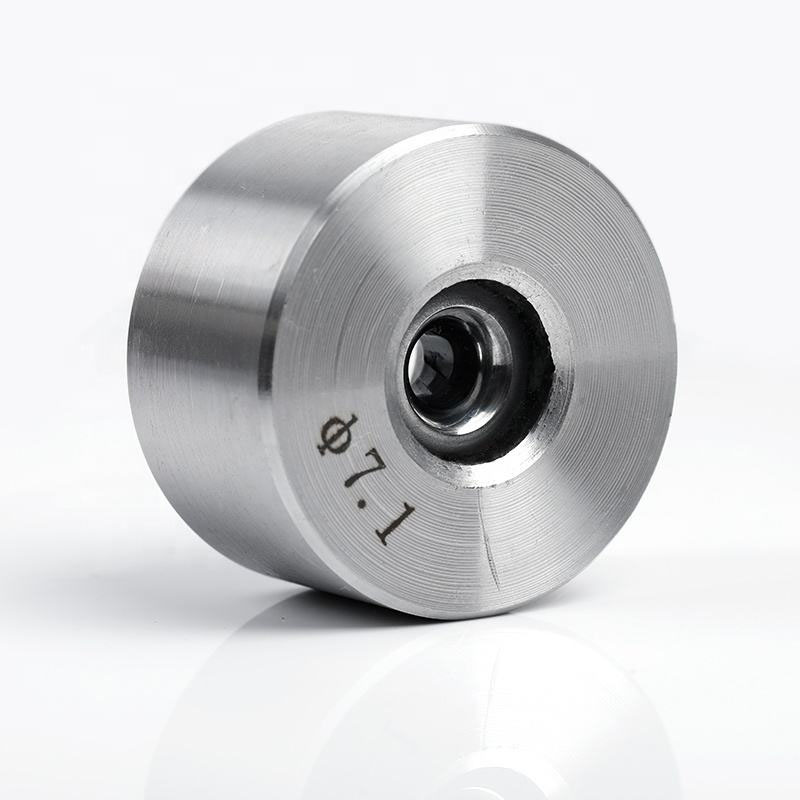
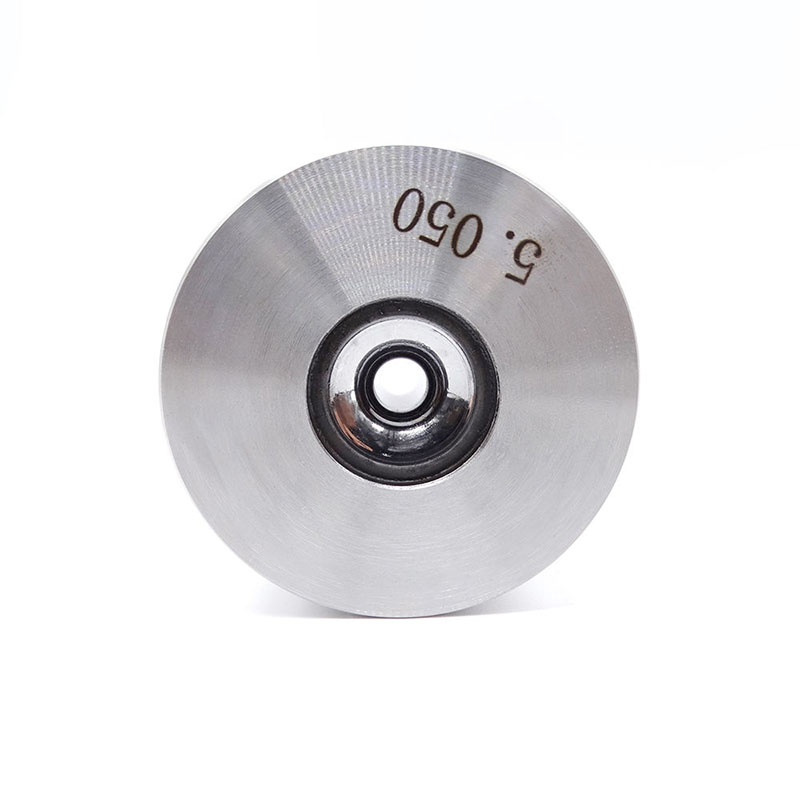
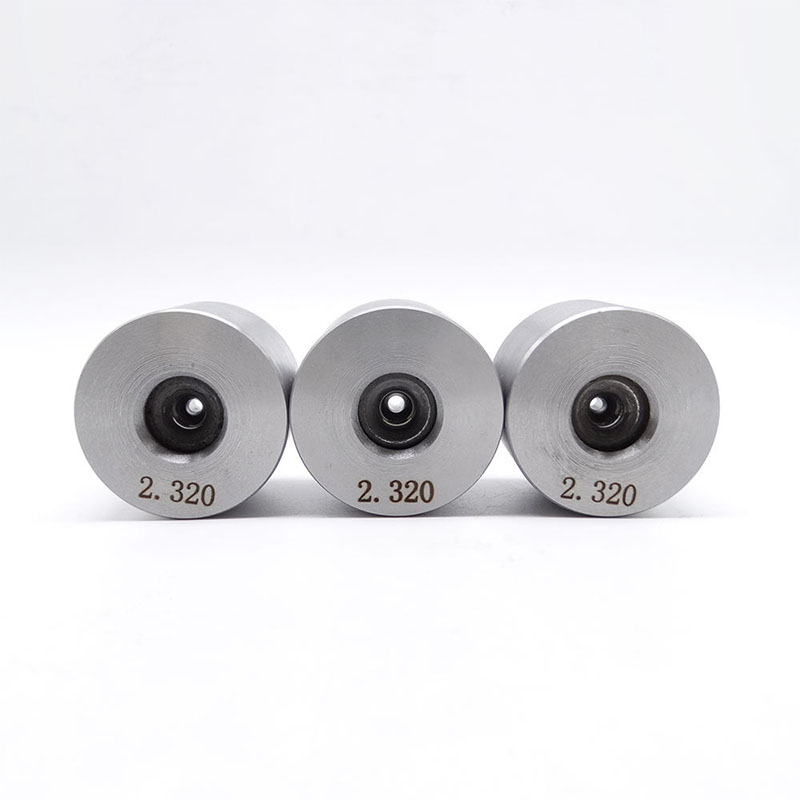
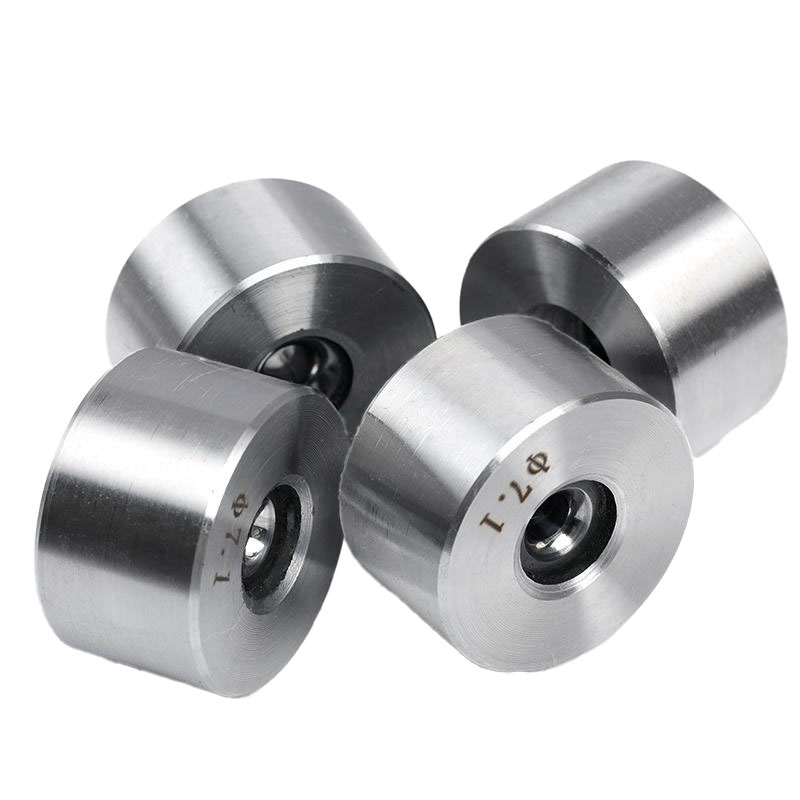
Tungsten Carbide Wire Drawing Dies for Low Carbon Steel Wire
Engineered for0. Maximum Die Life. Tungsten Carbide Wire Drawing Dies Designed for Superior Wire Quality.
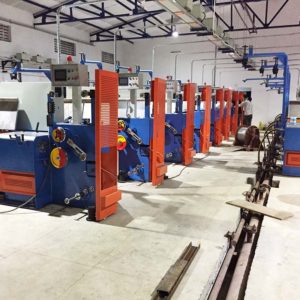
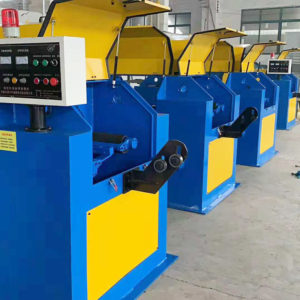
YF Metal Tech is a China-based manufacturer of tungsten carbide wire drawing dies and wire drawing machines. Our carbide dies are made for cold drawing low carbon steel wire, from 5.5–6.5 mm wire rod down to finished wire for nails, binding wire, galvanized wire, wire mesh, fasteners and welding wire. We supply finished dies in steel casings and unmounted carbide nibs, in six grades (YG6X to YG20), with bore sizes from 0.4 mm to 34.5 mm and the approach angle, bearing length and entrance profile set to your rod, machine and lubricant.
Tungsten carbide wire drawing dies at a glance
| Item | Specification |
| Die material | Cemented tungsten carbide (WC-Co) nib in a steel case |
| Carbide grades | YG6X, YG6A, YG8, YG12, YG15, YG20 |
| Bore (ID) range | 0.4–34.5 mm in standard sizes |
| Steel case size (OD × H) | 25 × 12 mm up to 120 × 50 mm |
| Carbide pellet size (OD × h) | 8 × 6 mm up to 60 × 35 mm |
| ID tolerance | 0 / −0.02 mm |
| Primary wire material | Low carbon steel wire |
| Also used for | Medium and high carbon steel, stainless steel, galvanized steel, welding wire, copper and other non-ferrous wire |
| Supply forms | Finished die with steel case, or unmounted carbide blank nib |
| Customization | Approach angle, bearing length, entrance bell, back relief, pellet and case dimensions, made to your drawing or sample |
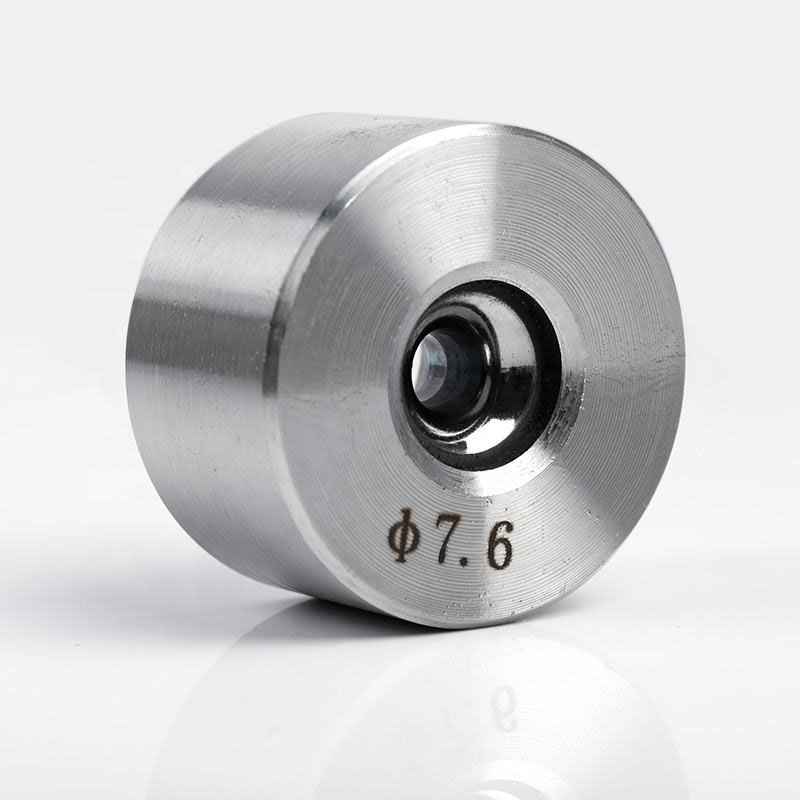
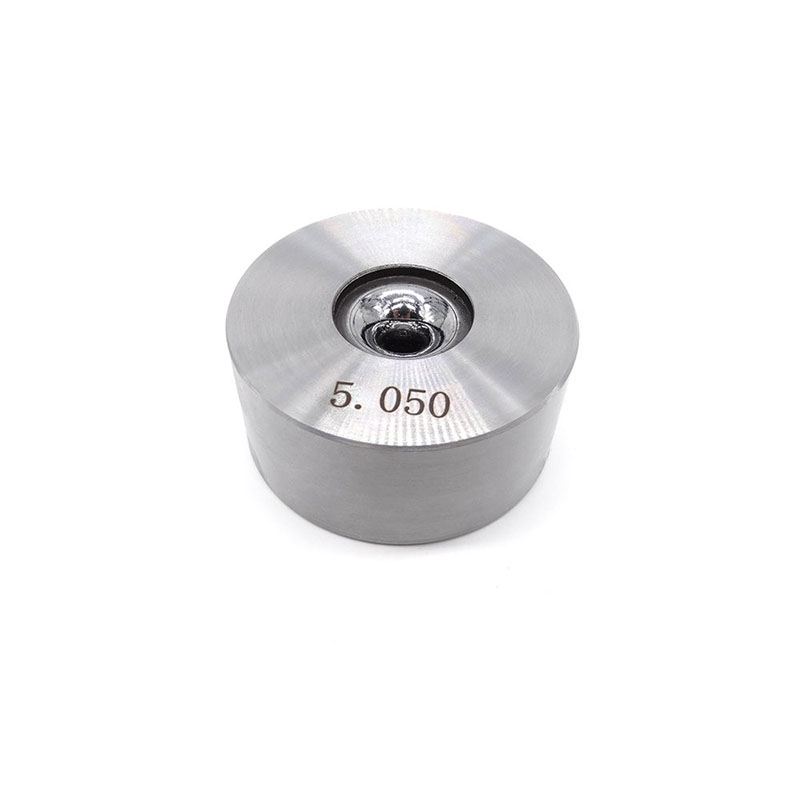
Why die selection matters when drawing low carbon steel wire?
Low carbon steel (typically up to about 0.25% carbon, for example SAE 1006–1022 and Q195/Q235 wire rod) is the highest-volume material in the wire industry. It draws easily, so die cost is driven by how long a die holds its size at line speed, not by whether the wire can be drawn at all. In practice four factors decide die life and wire quality:
- Rod surface condition. Residual mill scale is abrasive. It cuts ring-shaped wear into the approach zone and bearing and leaves longitudinal scratches on the wire. Clean descaling (mechanical brushing or pickling) and a good lubricant carrier matter as much as the die itself.
- Reduction and speed. Heavy reductions at high line speed raise wire and die temperature and thin the lubricant film. The approach angle and entrance profile must let lubricant be pulled into the die.
- Bearing condition. The bearing sets the final diameter and roundness. Once it wears, the wire runs oversize and out of round, which usually shows up downstream as nail-heading or welding-wire feeding problems.
- Alignment and vibration. Off-center entry chips carbide at the entrance and can split a die. Die-box alignment, capstan condition and die-case fit are part of die performance.
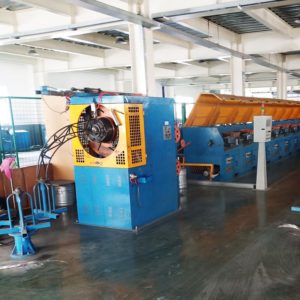
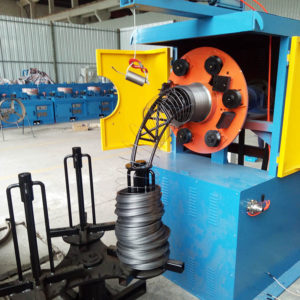
We design our dies around these four points. Because YF Metal Tech also builds straight line, wet, vertical and automatic wire drawing machines, we can match die case size, die-box fit and the drawing schedule to your line rather than selling a die in isolation.
Technical Parameters of Tungsten Carbide Wire Drawing Dies
Choosing the right carbide grade for low carbon steel wire
| Grade | ISO grade | Grain size | Binder | density | Hardness | T.R.S |
| (um) | (g/cm³) | (HRA) | (N/mm2) | |||
| YG6A | K20 | 0.8 | 6 | ≥15.10 | ≥91.5 | ≥1580 |
| YG6X | K10 | 1 | 6 | ≥15.00 | ≥91.0 | ≥1880 |
| YG8 | K30 | 1.5 | 8 | ≥14.80 | ≥89.5 | ≥2020 |
| YG12 | K30-K40 | 1.5 | 12 | ≥14.50 | ≥88.0 | ≥2600 |
| YG15 | K30-K40 | 1.5 | 15 | ≥14.00 | ≥87.0 | ≥2900 |
| YG20 | 1 | 20 | ≥13.80 | ≥86.0 | ≥2600 |
The trade-off is simple: more cobalt gives a tougher die that resists cracking, less cobalt gives a harder die that resists wear. How we apply it to low carbon steel:
- YG8 (general-purpose choice). The best balance of wear resistance and toughness. Our usual starting grade for dry drawing of low carbon steel wire.
- YG6X / YG6A (wear-resistance choice). Finer grain and higher hardness. Suited to intermediate and finishing dies, smaller diameters and steady, well-lubricated drawing where holding size and surface finish matter most.
- YG12 / YG15 (toughness choice). For coarse breakdown dies, heavy reductions, uneven entry or shock loads, and wherever cracking rather than wear is the failure you see. Expect faster wear than YG8.
- YG20. Highest toughness and lowest hardness, reserved for severe impact conditions.
Hardness and strength values above are minimum values for our standard grades. The final grade is confirmed against your rod, speed, lubricant and wear pattern.
Die geometry: approach angle, bearing and entrance
A wire drawing die works in four zones. The values below are typical starting ranges for dry drawing of low carbon steel, given for orientation. We set the final geometry with you based on rod grade, reduction, line speed, lubricant and machine.
| Zone | What it does | Typical starting range |
| Entrance (bell) | Guides the wire in and carries lubricant into the die | Smooth, generous radius, fully polished |
| Approach (reduction cone) | Where the diameter reduction takes place | Half-angle roughly 6°–10°; smaller angles are used for fine, high-speed drawing |
| Bearing (land) | Sets final diameter and roundness, takes the wear | Roughly 0.3–0.6 × finished wire diameter |
| Back relief (exit) | Frees the wire on exit and protects the bearing edge if drawing stops | Wide, smooth relief |
Reduction per pass matters as much as angle. Low carbon steel is commonly drawn at about 15–30% area reduction per pass on multi-die machines, with lighter reductions in the finishing pass to hold diameter tolerance. Elongation (length after drawing divided by length before) is the same quantity expressed differently and should be checked against your machine’s capstan speed ratios when you specify dies for a new schedule.
Standard sizes: steel case, carbide pellet and bore range
We supply both finished wire drawing dies with steel cases and tungsten carbide blank nibs.
| No | Steel case size | Pellet size | Carbide die | Tolerance of ID |
| OD*H(mm) | OD*h(mm) | ID(mm) | (mm) | |
| 1 | 25×12 | 8×6 | 0.6-1.0 | 0/-0.02 |
| 2 | 30×16 | 13×10 | 0.4-2.6 | 0/-0.02 |
| 3 | 32×23 | 16×13 | 0.4-3.5 | 0/-0.02 |
| 4 | 32×23 | 16×14 | 0.4-3.5 | 0/-0.02 |
| 5 | 40×28 | 20×17 | 1.8-5.2 | 0/-0.02 |
| 6 | 40×28 | 22×14 | 1.7-6.0 | 0/-0.02 |
| 7 | 40×28 | 22×18 | 1.7-6.0 | 0/-0.02 |
| 8 | 50×28 | 25×20 | 2.8-9.5 | 0/-0.02 |
| 9 | 70×35 | 30×22 | 5.5-12.5 | 0/-0.02 |
| 10 | 75×35 | 35×25 | 8.5-16.5 | 0/-0.02 |
| 11 | 80×35 | 40×25 | 16.5-24.5 | 0/-0.02 |
| 12 | 110×45 | 50×28 | 16.5-24.5 | 0/-0.02 |
| 13 | 120×50 | 60×35 | 24.5-34.5 | 0/-0.02 |
Need a size that is not listed? Send us the case and pellet dimensions or a sample die and we will quote to match.
Applications: where these dies are used
Tungsten carbide dies in these grades are used to draw low carbon steel wire for:
- Nail wire and common wire, where size consistency drives downstream heading and cutting
- Binding wire and tie wire
- Wire for galvanizing, drawn to size before hot-dip or electro-galvanizing
- Wire mesh, fencing and construction wire
- Cold heading and fastener wire for screws, rivets and bolts
- Welding wire rod and solid welding wire, including CO2 gas shielded welding wire before copper coating
The dies fit straight line (dry) wire drawing machines, wet (water tank) wire drawing machines, vertical and inverted drawing blocks and rolling cassette lines. The same dies can be specified for medium and high carbon steel, stainless steel and copper wire, with grade and geometry adjusted to the material.
Tungsten carbide vs. PCD wire drawing dies
| Tungsten carbide die | PCD die | |
| Best for | Coarse and medium low carbon steel wire, breakdown and intermediate passes, cost-sensitive production | Fine wire, very long runs, abrasive wire, lines where die changes are expensive |
| Wear life | Good, and the die can be re-polished or re-bored to the next size | Longer in suitable applications |
| Impact resistance | High, depending on grade | Lower, sensitive to shock |
| Cost per die | Lower | Higher |
| Typical size range | Wide, up to the largest drawing sizes | Mostly smaller diameters |
For most coarse and medium low carbon steel wire, carbide is the economical choice. PCD pays back on fine, high-tonnage lines. If PCD suits your line better, we will tell you so.
Custom wire drawing dies made to your drawing or sample
Standard dies cover most lines, but die life is often won through geometry. We make dies to your drawing or from a worn sample, including pellet and case dimensions, approach angle, bearing length, entrance profile and back relief. To recommend a grade and geometry, send us:
- Wire material and grade (for example SAE 1008, Q195, ER70S-6 rod)
- Rod diameter, finished diameter and your drawing schedule if you have one
- Machine type, line speed and lubricant (dry soap, wet emulsion, etc.)
- A sample die, drawing, or the case and pellet dimensions
- Monthly die consumption and the problem you want to solve (short life, scratches, oversize wire, cracking)
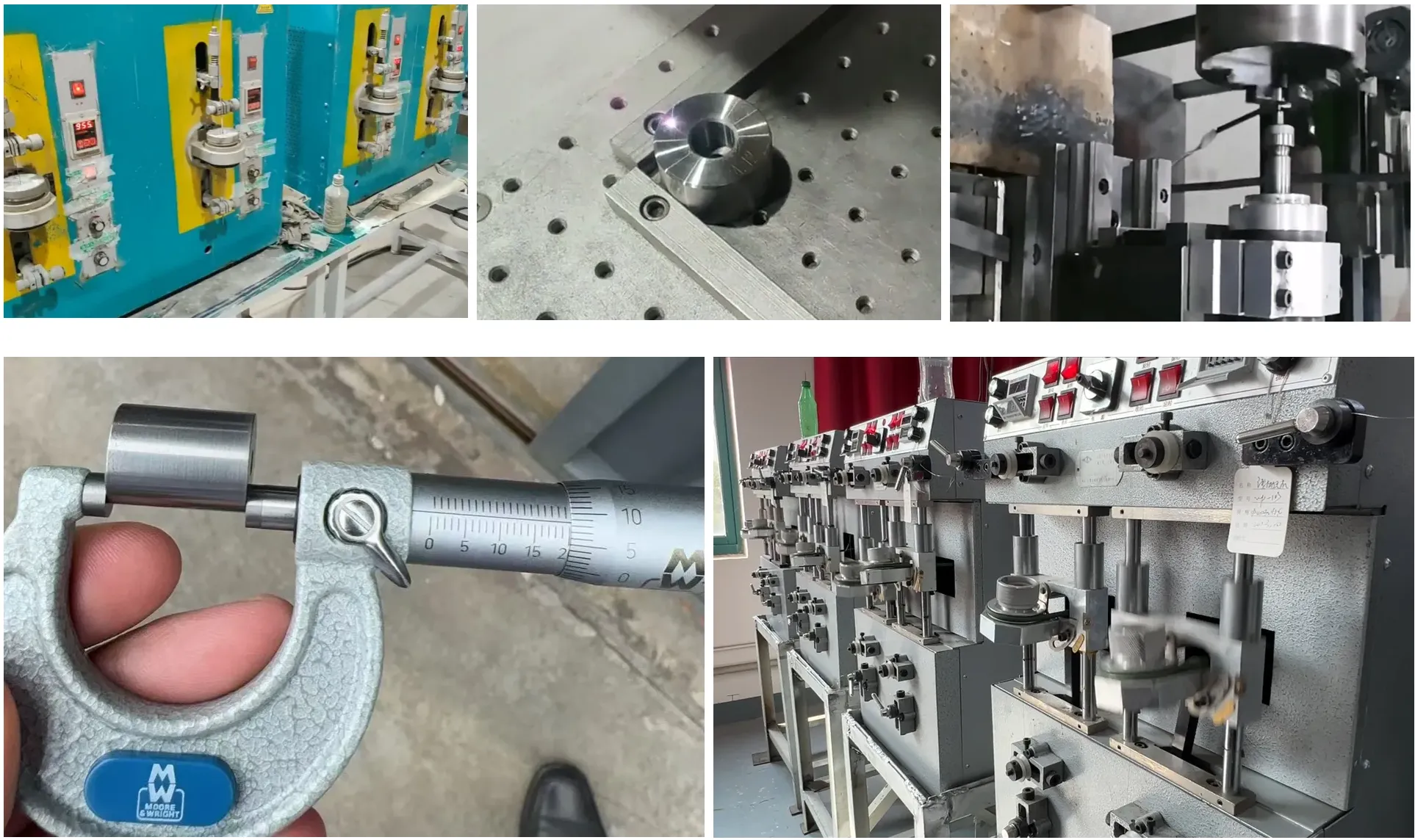
Quality control
- Carbide supplied in controlled lots, with the grade traceable by batch
- Bore ground and polished to a mirror finish through the approach zone and bearing
- Bore diameter, roundness, approach angle and bearing length checked before dispatch
- Steel case fit checked against your die box
- Each die packed individually to prevent edge chipping in transit
Troubleshooting: reading die wear on low carbon steel wire
| What you see | Likely cause | What to change |
| Wire drifting oversize, ring wear in the bearing | Abrasive scale, weak lubricant film, grade too soft for the speed | Improve descaling and lubrication, move toward YG6X / YG6A, review reduction |
| Longitudinal scratches on the wire | Scale or chips in the lubricant, damaged entrance or bearing | Filter or replace lubricant, re-polish or replace the die |
| Die cracks or splits | Off-center entry, heavy reduction, grade too hard, sharp entrance | Check alignment, reduce the pass, move toward YG8–YG12, use a rounder entrance |
| Out-of-round wire | Worn or too-short bearing, misaligned die box | Re-bore or replace the die, check die-box alignment |
| Overheating or frequent wire breaks | Excessive reduction, wrong angle, poor lubrication | Rebalance the drawing schedule, adjust angle, check lubricant supply and cooling |
For machine-side causes of vibration and breaks, see our guide: Shaking occurs during the operation of a wire drawing machine.
Frequently Asked Questions
1. What is the best tungsten carbide grade for low carbon steel wire?
YG8 is the usual starting point because it balances wear resistance and toughness. YG6X or YG6A suit finishing dies and smaller diameters where size and surface finish matter most. YG12 is used for coarse breakdown dies, heavy reductions or shock loads. We confirm the grade against your rod, speed and lubricant.
2. What is the difference between YG6 and YG8 dies?
The number is the cobalt binder content in percent. YG6 grades (6% Co) are harder and wear more slowly. YG8 (8% Co) is tougher, with a higher transverse rupture strength, so it resists cracking and chipping better. See the grade table above for the guaranteed values.
3. How long does a tungsten carbide wire drawing die last?
There is no honest single number, because life depends on the tonnage drawn and on rod scale, lubrication, speed, reduction, cooling, alignment and grade. Carbide dies can be re-polished and re-bored to the next size, which extends their useful life. Send us your tonnage per die and your current wear pattern and we will recommend a change.
4. What die angle should I use for low carbon steel wire?
For dry drawing, a half-angle of roughly 6°–10° is a common starting range, with smaller angles used for fine wire at high speed to help pull lubricant into the die. The right angle depends on reduction, speed and lubricant, so we set it with you.
5. Can I use these dies for other wire materials?
Yes. The same die family is used for medium and high carbon steel, stainless steel, galvanized steel, welding wire, copper and other non-ferrous wire. Grade and geometry change with the material, so tell us what you draw.
6. Do you supply blank nibs only, or finished dies?
Both. We supply tungsten carbide blank nibs and finished wire drawing dies with steel cases.
7. Can you match dies to my wire drawing machine?
Yes. We also manufacture wire drawing machines, so die case size, die-box fit and the drawing schedule can be matched to your line.
8. What information do you need to quote?
Wire material, rod and finished diameter, machine type and speed, lubricant, and either a sample die, a drawing or the case and pellet dimensions, plus your monthly quantity.